Panbu Electric

Solutions

From parameter matching to whole-line energy optimization, we provide an all-in-one retrofit solution integrating motors, drives, and controls.

Solution Categories
Industries

MotorSolutions

Selection of Permanent Magnet, Magnetic Reluctance, and Standard Motor Replacements for Whole-Plant Energy Retrofitting

Motor replacement solutions

Motor · Industrial Motor Replacement

Motor replacement solutions

Address challenges such as aging equipment, motor maintenance needs, and high procurement costs. Leveraging motor parameters, mechanical dimensions, and actual operating conditions, we provide 1 compatible industrial motor replacement solutions for 1, requiring no structural modifications to your equipment.

Use Cases

Motor replacement for aging equipment, domestic substitution for imported motors, and replacement of discontinued models

Solve pain points

Original model discontinued; procurement is difficult.High maintenance costs and frequent failuresComplex installation size matching

Solution Composition

Parameter mapping and selection matching / Mechanical dimension 1 to 1 compatibility / On-site replacement and commissioning support

Permanent Magnet/Synchronous Reluctance Motor Energy Efficiency Retrofit

Motor · PM Motor Retrofit

Permanent Magnet/Synchronous Reluctance Motor Energy Efficiency Retrofit

Replace traditional induction motors with permanent magnet synchronous motors (PMSM) or permanent magnet reluctance motors (PMRM). Optimize motor-load matching based on operating conditions to reduce energy consumption and improve operational stability.

Use Cases

Continuous-duty loads such as chemical fiber, injection molding, and air compressors

Solve pain points

Low efficiency of asynchronous motorsEnergy waste under light-load conditionsRefurbishment cycle impacts production.

Solution Composition

Load Condition Survey / Permanent Magnet Motor Selection & Matching / Energy Saving Verification

Water utility energy efficiency retrofit

Motor · Water Conservation

Water utility energy efficiency retrofit

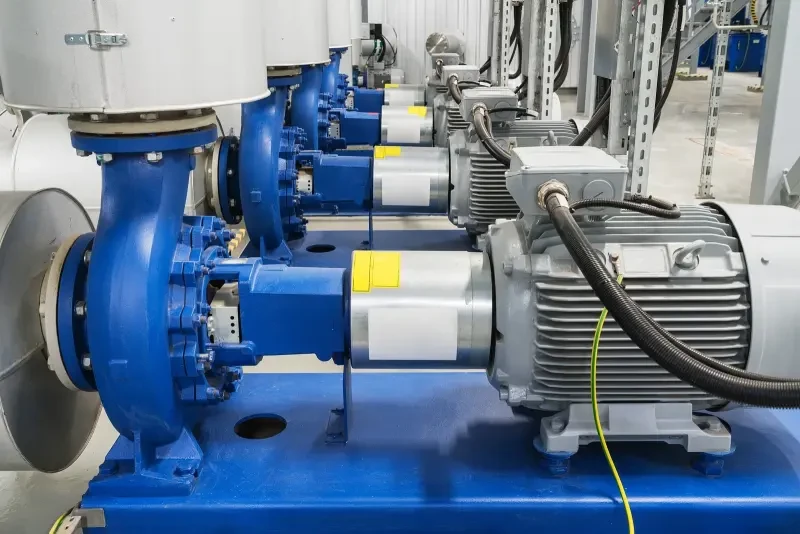
Variable-frequency linked control and permanent magnet motor solution for water supply and sewage treatment, adjusting flow and pressure on demand to reduce energy consumption per ton of water.

Use Cases

Municipal water supply, secondary water supply, and sewage treatment plant pump systems

Solve pain points

High energy consumption of pump sets operating at fixed frequencyLarge fluctuations in pipeline pressureHigh labor costs for equipment inspections

Solution Composition

Pump Unit Energy Efficiency Assessment / VFD Control Cabinet Integration / Remote Energy Management

Building energy retrofit

Motor · Building Energy Efficiency

Building energy retrofit

Upgrade EC fans and permanent magnet motors in commercial building HVAC systems, integrating with building automation for on-demand cooling and heating.

Use Cases

Commercial complexes, office buildings, hospitals, and data center server rooms

Solve pain points

Air conditioning system operating continuously at full loadHigh energy consumption in terminal air systemsLack of sub-metering for energy consumption

Solution Composition

HVAC System Diagnostics / EC Fan & Permanent Magnet Motor Replacement / Building Automation Integration

Industrial Energy Saving Solutions Consultation

Motor · Energy Consulting

Industrial Energy Saving Solutions Consultation

Factory-wide motor system energy-saving diagnostics and retrofit planning, delivering phased implementation roadmaps and ROI projections.

Use Cases

Comprehensive audit of factory-wide motor systems, energy-saving project assessment, and carbon management planning

Solve pain points

Missing factory-wide energy consumption dataDifficulty deciding on modernization prioritiesProject initiation lacks calculation basis

Solution Composition

Factory-wide motor survey / Energy-saving ROI calculation / Phased retrofit planning

Energy-saving retrofit of switched reluctance motor speed control system

Motor · SRM Drive Retrofit

Energy-saving retrofit of switched reluctance motor speed control system

Replace the existing asynchronous motor + VFD/electromagnetic drive system with the Panpu SRM series Switched Reluctance Motor Drive (SRD). Designed for underloaded ("big horse pulling small cart") and heavy-load frequent start-stop conditions, it matches motor output to actual load requirements. Overall efficiency exceeds that of AC asynchronous motor VFD systems by more than 3%, and in low-speed conditions, by over 10%. Typical energy savings range from 10% to 50%.

Use Cases

Oilfield pumping units and well testing machines, injection molding machines and extruders, horizontal boring mills and vertical lathes, screw presses and brick pressing machines, ball mills and crushers, fans and pumps with compressors, etc., under variable load conditions, heavy-load starting, frequent forward/reverse rotation, and frequent start/stop operations.

Solve pain points

The motor's rated power far exceeds the equipment's actual operating power, resulting in low efficiency during prolonged light-load operation.High starting torque is required for overloaded or high-inertia equipment; standard induction motors draw 0 to 7 times the rated current, causing grid surges.Motor overheats significantly during low-speed VFD operation; temperature rise compromises insulation life.Frequent load fluctuations and rapid forward/reverse cycling cause accelerated wear and high failure rates in transmission and electrical components.No-load power factor is only 0.2~0.4; additional reactive power compensation equipment is required.Device status is not visible; lack of power consumption and operational data hinders energy-saving decisions.

Solution Composition

Load profile mapping and power matching for selection (0.55~315kW, 750/1000/1500/3000r/min four rated speed options) / Panpu SRM Switched Reluctance Motor (rotor without windings or permanent magnets, H-class insulation, IP54 protection rating) / SRD Intelligent Controller (dual-loop speed and current control, wall-mounted, IP23 protection rating) / Mechanical interface and mounting dimension compatibility (132~355 frame sizes, 1x1 to replace existing mounting locations) / Protection and self-diagnostic configuration (overvoltage, undervoltage, phase loss, overload, stall, overcurrent, output short circuit, overheating) / Digital motor IoT platform integration (real-time monitoring of energy consumption, production capacity, and operating conditions) / On-site installation, commissioning, and operational data acceptance

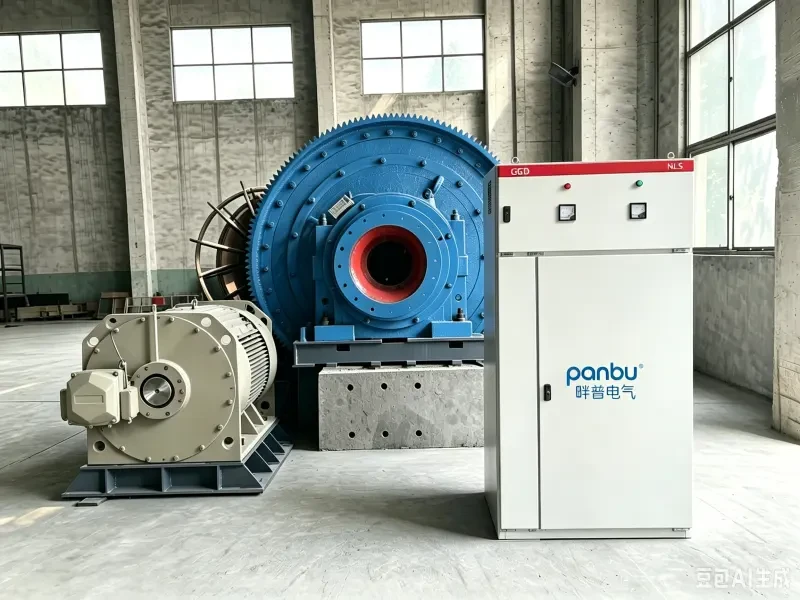
Ball Mill Permanent Magnet Direct Drive System Solution

Motor · Ball Mill PM Direct Drive

Permanent Magnet Direct-Drive System Solution for Ball Mills

The TYCP5 series low-speed permanent magnet motor for Wolong ball mills, combined with the WD200 high-performance vector inverter and system control cabinet, forms a permanent magnet direct-drive system. The permanent magnet synchronous motor is directly connected to the pinion of the mill's second shaft to drive the mill cylinder, replacing the traditional "induction motor + reducer + auxiliary drive" configuration. System efficiency improves from 75%–95% to 97%–98%, achieving energy savings of up to 10.2% after retrofitting.

Use Cases

Ball mills for dry and wet grinding in industries such as cement, silicate products, new building materials, refractories, fertilizers, non-ferrous metal mining, glass, and ceramics.

Solve pain points

Traditional asynchronous motors with gear reducers feature complex structures, low efficiency, require auxiliary transmission systems, and have complicated start-up procedures.High maintenance costs for gearboxes, prone to oil leaks and vibration. Bearings and bearing housings may fatigue and deform due to vibration, leading to permanent failure.Single operating mode cannot meet speed requirements under different working conditions.The control system module is outdated, unstable, and has low automation levels, failing to meet the requirements of digital factory management.Insufficient preventive inspections hinder accurate operational data collection, failing to meet full lifecycle maintenance requirements.

Solution Composition

TYCP5 Series Low-Speed Permanent Magnet Motor for Ball Mills (Frame sizes 280~500, power 15~400kW, speeds 120/160/200/250 r/min in four options, efficiency 87.3%~95.7%, power factor 0.95~0.98, maximum torque ratio 1.8, supporting 380V/660V) / WD200 Series High-Performance Vector Frequency Inverter (0.75~1000kW, precise vector control speed regulation, 0.5Hz output delivering 150% rated torque, efficiency up to 98%, compatible with reactors and filter units) / System Control Cabinet (centralizes all equipment within the control system and collects operational data, providing real-time system protection) / PLC and Sensors (real-time acquisition of operational parameters such as speed, temperature, and vibration) / Shunzhi Cloud iMotorLinx Industrial IoT Platform (remote monitoring, condition diagnostics, and precise alerts)

Drive Control System Solutions for the Pulp and Paper Industry

Motor · Pulp and Paper Drive Control

Pulp and Paper Industry Distributed Control System (DCS) Solution

Designed for key pulping and papermaking equipment such as refiners, hydraulic pulpers, and pressure screens, the four-layer drive control system integrates TYCP5 low-speed permanent magnet synchronous motors, WEPM series PM motors, WD200 high-performance vector inverters, PLCs, and cloud platforms across the information, control, drive, and execution layers. This replaces traditional asynchronous motor + gearbox drives, boosting system efficiency by 15%~25% after typical retrofitting.

Use Cases

Low-speed, high-torque equipment for the pulping and papermaking industry: refiners, hydraulic pulpers, pressure screens, screening machines, and mixers.

Solve pain points

Pulpers, hydraulic pulpers, pressure screens, and other pulping equipment suffer from low system efficiency, high failure rates, and limited automation.Induction motors have low efficiency and power factor, failing to meet the minimum requirements of current energy efficiency standards.The system has been running at 40%~60% load for an extended period, which falls within the low-efficiency range of asynchronous motors, resulting in significant energy waste.Redundant motor and reducer transmission structure, large footprint, high maintenance costs.High noise and vibration; frequency-based startup causes grid shock; poor stability under heavy-load startup.

Solution Composition

Information Layer: Cloud platform, app, and data acquisition I/O for real-time visualization, monitoring, warning, and control of operational data. Control Layer: Centralized PLC control with motor speed adjustment based on process requirements. Drive Layer: WD200 series high-performance vector inverters (0.75~1000kW, compact book-style design for easy cabinet integration; compatible with asynchronous and permanent magnet synchronous motors; high-speed high-torque output; controlled rectification technology reduces system failure rates; supports RS485 and fieldbus communication) + ECC electrical cabinets. Actuation Layer 1: TYCP5 series low-speed permanent magnet synchronous motors (power 1.1~900kW, 380V, speed 25~500r/min, 1 efficiency class, frame sizes 180~560, V1 mounting). Actuation Layer 2: WEPM series permanent magnet synchronous motors (IE5~IE4 efficiency class, power 0.18~315kW, speed 3000/1500r/min, B3 mounting, self-cooled design requiring no forced ventilation).

Flotation Cell Drive Control System Solution

Motor · Flotation Machine Drive Control

Flotation Cell Drive and Control System Solution

The TYCP5 series flotation machine utilizes a low-speed permanent magnet motor for direct drive of the impeller, replacing the traditional "induction motor + pulley + belt" transmission system. Paired with WD200 high-performance vector inverters, ECC variable frequency control cabinets, and system control cabinets, it can optionally connect to the iMotorLinx Shunzhi Cloud industrial internet platform. Under an 8kW load condition (8), total transmission efficiency increases from 76% to 90.5%, achieving energy savings of up to 16.1%.

Use Cases

Flotation machines, agitated tanks, and other mineral separation equipment for flotation circuits in non-ferrous and ferrous metal concentrators

Solve pain points

The conventional flotation cell control module is outdated and unstable, with low automation levels.Limited preventive inspections prevent accurate collection of key parameters for safe and reliable flotation cell operation, failing to meet full lifecycle maintenance requirements.Traditional power systems use asynchronous motors with pulleys and belts, involving multiple intermediate stages that result in low equipment operating efficiency.Overall transmission efficiency is only about 76%, and the motor power factor is low (around 0.88), leading to significant energy consumption and apparent power waste.Flotation system performance directly impacts mineral processing efficiency; with dwindling mineral resources, there is an urgent need for high-efficiency, energy-saving separation equipment.

Solution Composition

TYCP5 Series Low-Speed Permanent Magnet Motors for Flotation Machines (Direct Drive, Frame Sizes 90L~450M, Power 0.37~185kW, Speeds 110/130/160/200/250/300/360 r/min, Efficiency 77.2%~95.0%, Power Factor 0.96, Max Torque Multiplier 1.8, Supports 380V/660V) / WD200 Series High-Performance Vector Frequency Inverters (0.75~1000kW, Precise Speed Control via Vector Control, 20.5Hz Output at 150% Rated Torque, Efficiency Up to 98%, Compatible with Reactors and Filter Systems) / ECC Series Variable Frequency Control Cabinets and System Control Cabinets (Centralized Equipment Control, Motor Speed Regulation, Overload/Overvoltage/Undervoltage/Short-Circuit Protection) / Smart Sensors (Optional Wireless Temperature & Vibration Sensors and Industrial Ethernet Modules) / iMotorLinx Shunzhi Cloud Industrial Internet Platform (Remote Control, Real-Time Monitoring, Fault Diagnosis, Analysis, and Precision Alarms)

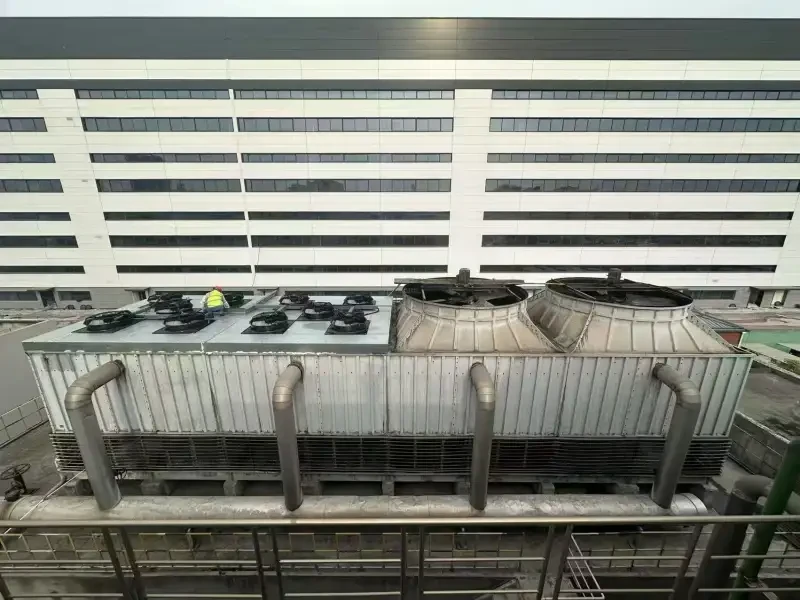
Permanent Magnet Direct-Drive Cooling Tower System Solution

Motor · Cooling Tower Preventive Maintenance Direct Drive

Permanent Magnet Direct Drive Cooling Tower System Solution

The permanent magnet direct-drive motor, designed specifically for cooling towers, is directly coupled to the fan via a coupling, replacing the traditional "induction motor + reducer (belt and pulley)" transmission system. Paired with the WD200 dedicated variable frequency drive, ECC VFD control cabinet, and iMotorLinx industrial IoT platform, the overall transmission efficiency increases from 81.0% to 93.5% under a 55kW load condition, achieving an energy-saving rate of 28.9%.

Use Cases

Cooling tower fans and circulating water cooling systems for industries including power, chemical, steel, data centers, and building HVAC.

Solve pain points

Traditional powertrains use asynchronous motors with gear reducers (belts, pulleys). The multiple intermediate stages result in low efficiency and high maintenance costs.Long-term low-load fan operation results in poor efficiency and significant energy waste.The control module is outdated and unstable, with low automation levels.Limited preventive inspections hinder accurate collection of key parameters for safe and reliable cooling tower operation, failing to meet full-lifecycle O&M requirements.Cooling towers operate in damp, wet environments, requiring high motor protection ratings and specialized cooling designs. Standard asynchronous motors lack the reliability needed for such conditions.

Solution Composition

Permanent Magnet Direct-Drive Motor for Cooling Towers (TYCP5 Series, IP55/IP67 protection, IC408 cooling structure eliminates need for independent fan, direct-coupled via coupling to fan), frame sizes 180~560, power ratings 1.1~280kW, speeds 90/110/130/160/200/250/300/360 r/min (8 options), efficiency 83.2%~96.0%, power factor 0.96~0.98, maximum torque ratio 1.8, supports 380V/660V) / WD200 High-Performance General-Purpose Variable Frequency Drive (0.75~1000kW, three-phase 380V~480V and 660V~690V, 50Hz/60Hz input, output frequency 0~600Hz, vector control for precise torque regulation, up to 98% efficiency, compact design for easy panel integration) / ECC Series VFD Control Cabinet & System Control Cabinet (integrated system solution designed specifically for permanent magnet direct-drive motor control, comprehensive protection features, mobile app control and PC wireless monitoring) / Smart Sensors (optional wireless temperature-vibration sensors and industrial Ethernet modules) / iMotorLinx Shunzhi Cloud Industrial Internet Platform (remote control, real-time monitoring, spectrum analysis, remote fault diagnosis, precise alarms)

Rare Earth Application Industry Drive and Control System Solutions

Motor · Rare Earth Drive Control

Rare Earth Application Industry Drive and Control System Solution

A direct-drive system for mixers and reaction vessels in rare earth smelting separation facilities—including dissolution, extraction, and precipitation workshops—combines the TYCP5/TBYCP5 series low-speed permanent magnet direct-drive motor, WD200 high-performance vector frequency converter, and ECC electrical control cabinet. Integrated with DCS and remote monitoring, it replaces traditional asynchronous motor setups (with belt drives or inverters mounted on frames), enabling wide-range low-speed constant-torque operation and full lifecycle equipment maintenance.

Use Cases

Slurry tanks, acid digestion reactors, aluminum removal reactors, precipitation reactors, carbonation reactors, and extraction mixing units in rare earth smelting and separation facilities.

Solve pain points

Traditional rare earth processing stirring equipment relies on asynchronous motors with belt drives or asynchronous motors with variable frequency drives and frames, resulting in excessive intermediate components and low transmission efficiency.The mixer must operate at constant torque across wide low-speed ranges such as 0~80, 0~100, 0~250, and 0~300 r/min. However, asynchronous motors exhibit poor efficiency and power factor at low speeds.The control module is outdated and unstable, with low automation levels.DCS and remote monitoring not integrated; process parameter adjustments rely on manual intervention, failing to meet digital factory management requirements.Insufficient preventive inspections hinder accurate collection of key parameters for safe and reliable equipment operation, failing to meet full lifecycle maintenance requirements.

Solution Composition

TYCP5/TBYCP5 Series Low-Speed Permanent Magnet Direct-Drive Motors (Frame sizes 180–560, power 1.1–900kW, speed 25–500r/min, rated voltage 380V/660V, GB30253 / GB1 energy efficiency, S1 duty standard with S2/S3 options, V1 mounting standard with B3 option, F-class insulation with H-class option, IP55 protection with IP65/IP56/IP66 options, cooling H180–355 as IC410, H400–560 as IC70W, with IC418/IC416/IC71W options) / WD200 Series High-Performance Vector Variable Frequency Drives (0.75–1000kW, four power supply types, compact design for easy cabinet integration, compatible with asynchronous and permanent magnet synchronous motor control, precise speed regulation via vector control) / ECC Series Electrical Control Panels (centralized control and data acquisition, comprehensive protection features) / DCS Integration and Remote Monitoring Connectivity (centralized process parameter scheduling and data upload) / Wireless Temperature & Vibration Sensors and Wolong Shunzhi Cloud Industrial Internet Platform (temperature/vibration spectrum analysis, remote fault diagnosis, and precise alarm notification).

Beam Pump Drive Control System Solution

Motor · Oil Pump Drive Control

Beam Pump Drive Control System Solution

Designed for beam pumping units in oilfields, this solution replaces the traditional asynchronous motor with pulleys and gear reducer using a TYCP5 series low-speed permanent magnet synchronous motor direct drive. Paired with the WD200 high-performance vector frequency converter and energy feedback unit, it enables four-quadrant operation and recovers energy during the downstroke. The system transmission efficiency increases from 81% to 92.12%, achieving an energy saving rate of 15%~40%.

Use Cases

Beam pumping units, walking beam pumps, and other oilfield extraction equipment for various oilfield environments (commonly available in 2 ton, 8 ton, and 10 ton capacities; paired motor power ranges from 18.5 to 110 kW).

Solve pain points

Traditional transmission systems use an asynchronous motor with pulleys and a reducer. The intermediate transmission components and mechanical wear are key factors limiting system efficiency improvements.High annual maintenance costs for gear reducers and belts; a 2kW system is estimated at 2 to 1 million CNY/year, with frequent unplanned downtime.During the downstroke, the motor operates in generator mode; since the regenerated energy cannot be recovered, the excess energy dissipates as heat.The control module is outdated and unstable, with low automation levels.Limited preventive inspections prevent accurate collection of key parameters for the safe and reliable operation of pumping units, failing to meet lifecycle maintenance requirements.

Solution Composition

Information Layer: Wolong Shunzhi Cloud IoT module enables production visualization, remote monitoring, and debugging, supporting both app and web interfaces for interaction and control. Control Layer: Facilitates information exchange between DCS and PLC control layers, with full communication parameter tuning and adaptation. Drive Layer: WD200 series high-performance vector inverters combined with energy recovery units deliver energy regeneration, vector frequency conversion control, S-curve soft start, and precise speed-torque regulation. Execution Layer: TYCP5 series low-speed permanent magnet synchronous motors with direct drive (frame sizes 180–560, power ratings 1.1–900 kW, speeds 25–500 r/min, voltages 380V/660V, IE1 efficiency class, mounting options V1 or B3, insulation class F upgradeable to H, protection ratings IP55 upgradeable to IP56/IP65/IP66, cooling methods IC410/IC70W upgradeable to IC418/IC416/IC71W, cast iron or steel housing, grease-lubricated with drain/fill fittings, optional PT100/PTC protection).

Agitation Equipment Drive Control System Solution

Motor · Mixing Equipment Drive Control

Agitation Equipment Drive Control System Solution

A low-speed permanent magnet direct-drive system solution for agitators in the oil, chemical, pharmaceutical, and steel industries. The TYCP5 series low-speed permanent magnet motor directly drives the agitator shaft, replacing traditional asynchronous motors with belt-driven gearboxes. It integrates the WD200 series high-performance vector inverters, ECC variable frequency control cabinets, high-performance PLCs, wired/wireless temperature-vibration integrated sensors, and the Wolong iMotorLinx Shunzhi Cloud industrial internet platform to simplify the transmission chain, improve efficiency, and enable real-time monitoring of operational status.

Use Cases

New installations and energy-efficient retrofits for mixing equipment such as agitators, reactors, slurry tanks, and mixing vessels in the petroleum, chemical, pharmaceutical, and steel industries.

Solve pain points

Traditional asynchronous motor systems with belt reducers and mixing shafts have complex transmission structures, numerous intermediate stages, and high failure rates.Reducers and belts require regular maintenance and replacement, leading to high repair costs and unplanned downtime that disrupts continuous production.Low system transmission efficiency, high operating costs, and significant energy waste.Mixing applications require low-speed, high-torque constant-torque operation. Asynchronous motors suffer from poor efficiency and power factor at low speeds, along with inadequate speed control performance.High starting current and vibration cause shock to the agitator shaft and equipment foundation.Outdated control modules, low levels of automation and intelligence, and a lack of means for collecting operating parameters and performing preventive detection.

Solution Composition

TYCP5 Series Low-Speed Permanent Magnet Motors for Agitation: Engineered specifically for mixing applications, featuring high efficiency, high power factor, strong overload capacity, low vibration, and quiet operation. The motor shaft connects directly to the agitator shaft for rotation, replacing asynchronous motors with gear reducers. Frame sizes 280 through 560, power range 3 to 355kW, seven speed options at 30, 45, 60, 75, 90, 110, 130 r/min, full-load efficiency from 84.7% to 96.2%, power factor from 0.96 to 0.99, maximum torque ratio of 1.8, supporting dual voltage input of 380V and 660V. Specific WD200 inverter models and installation/dimensions are provided per model / WD200 Series High-Performance Vector Inverters: Power coverage from 0.75 to 1000kW, supporting four power supply types. Compact design saves cabinet space and offers flexible panel assembly. Advanced motor control algorithms ensure optimal matching with permanent magnet motors, enabling precise torque control via vector control. Output 150% rated torque at 0.5Hz (SVC) and 200% rated torque at 0Hz (FVC). Stable operation under rated load at 1Hz (SVC). Speed control accuracy error within 0.1% of rated speed (SVC) and 0.05% (FVC). Maximum operating efficiency up to 98%. Features superior current suppression to mitigate shock currents from sudden load changes and reduce equipment downtime; supports installation of reactors and filtering devices / ECC Frequency Control Cabinets and High-Performance PLCs: Centralized system control, real-time data collection, and comprehensive system protection / Wired/Wireless Integrated Temperature & Vibration Sensors: Capture motor temperature and vibration data, supporting spectral analysis and remote fault diagnosis / Wolong iMotorLinx Shunzhi Cloud Industrial Internet Platform: Real-time monitoring, on-demand display, fault diagnosis, and spectral analysis. Quickly create personalized alert rules and receive notifications via email, SMS, HTTP, or HTTPS for timely and precise alerts.

Belt Conveyor Drive Control System Solution

Motor · Belt Conveyor Drive Control

Belt Conveyor Drive and Control System Solution

Low-speed permanent magnet direct-drive system solutions for belt conveyors in mining, chemical, and building materials industries. The TYCP5 series low-speed permanent magnet motor drives the conveyor directly, eliminating intermediate components such as gearboxes, fluid couplings, and multi-stage pulleys. Paired with the WD200 high-performance vector frequency converter, ECC variable-frequency control cabinet, advanced PLC, wired/wireless integrated temperature-vibration sensors, and Wolong iMotorLinx Shunzhi Cloud industrial internet platform, it simplifies the transmission chain, improves efficiency, and enables real-time monitoring of operational status.

Use Cases

Belt conveyors for new installations and energy-efficient upgrades in mining, chemical, and building materials industries. Designed for long-distance, high-capacity transport with heavy-load startup and multi-motor drive configurations.

Solve pain points

Traditional low-speed transmission systems, dominated by asynchronous motors, feature complex structures with hydraulic couplings, multi-stage pulleys, and gearboxes, involving numerous intermediate stages.High failure rates, frequent oil leaks in fluid couplings, belt slippage, and reducer wear result in extensive maintenance requirements.Low system transmission efficiency, high operating costs, and significant energy waste.Heavy-load start-up is difficult with high inrush current, causing stress on the power grid and conveyor belt.Poor speed regulation performance; fails to adapt to varying throughput and multi-machine power balancing requirements.Lack of operational parameter collection and preventive detection capabilities, resulting in low automation and intelligence levels.

Solution Composition

TYCP5 Series Low-Speed Permanent Magnet Motors for Belt Conveyors: A direct-drive solution designed specifically for the belt conveyor industry. Directly coupled to drive the conveyor, it eliminates intermediate components such as gearboxes and fluid couplings, significantly improving equipment efficiency while reducing energy consumption and emissions. Frame sizes 400 to 800, power range 15 to 900kW, four speed options of 48, 60, 75, 90 r/min, efficiency from 90.0% to 95.5%, power factor 0.96, maximum torque multiplier 1.8. Supports dual voltage input of 380V and 660V. WD200-T3 and WD200-T6 inverter models are matched per motor specification. Installation dimensions (A, B, C, D, E, F, G, H, K) and overall dimensions (AB, BB, HD, L) are available for center heights 400, 450, 500, 560, 630, 710, 800. Installation method, cooling method, and dimensions can be customized according to user requirements if standard specifications are unavailable. WD200 Series High-Performance Vector Inverters: Wolong's new generation high-performance general-purpose inverters. Power coverage ranges from 0.75 to 1000kW. Compatible with four power supply types, supporting asynchronous motors, permanent magnet synchronous motors, and synchronous reluctance control. Equipped with advanced motor control algorithms optimized for efficient matching with Wolong motors, vector control ensures precise speed regulation. Features include high reliability, superior performance, strong scalability, multi-motor drive support, and easy cabinet assembly. The full series features a narrow-body design to save cabinet space, reduce costs, and support various installation methods. Delivers 0.5% rated torque at 0Hz (SVC) and 150% rated torque at 200Hz (FVC), offering excellent low-frequency characteristics with efficiency reaching up to 98%. Output frequency ranges from 0 to 600Hz. Input supports three-phase 380V to 480V and 660V to 690V at 50Hz/60Hz. Voltage imbalance rate is less than 3%, frequency fluctuation is within ±5%. Protection rating is IP31 (higher ratings available upon request). Wall-mounted installation with forced air cooling. Can be equipped with reactors and filter devices to prevent grid shock, interference, or impact on surrounding equipment. ECC Variable Frequency Control Cabinet & High-Performance PLC: Centralized control system for all equipment within the facility, collecting system data and providing real-time protection. Wired/Wireless Integrated Temperature and Vibration Sensor: Captures motor temperature and vibration data, enabling motor spectrum analysis and remote fault diagnosis. Wolong iMotorLinx Shunzhi Cloud Industrial Internet Platform: Real-time monitoring and on-demand visualization. Provides email, SMS, HTTP, and HTTPS notifications for timely and accurate alarms.

Permanent Magnet Drum Drive Control System Solution

Motor · Permanent Magnet Drum Drive Control

Permanent Magnet Drum Drive Control System Solution

A permanent magnet electric drum direct-drive system solution for belt conveyors in mining, chemical, and building materials industries. Replacing traditional drive systems with gear reducers and asynchronous motors, the STY series permanent magnet direct-drive drums are paired with WD200 series high-performance universal variable frequency drives and energy feedback units, Wolong Shunyun IoT modules and PLCs, advanced wireless temperature-vibration integrated sensors, and the Wolong iMotorLinx Shunzhi Cloud industrial internet platform to achieve simplified transmission chains, S-curve smooth starts, precise speed-torque control, and energy recovery.

Use Cases

Direct drive retrofitting and new installation of belt conveyors for mining, chemical, building materials, and other industries. Belt width 650 to 1600mm, belt speed 1.6 to 5.0m/s, drum diameter 500 to 1250mm, power 22 to 315kW.

Solve pain points

Traditional drives use a reducer paired with an asynchronous motor, resulting in multiple transmission stages, complex structure, and high procurement and maintenance costs.High failure rates of gearboxes and fluid couplings, frequent oil leaks and wear issues, and unplanned downtime disrupting continuous production.High starting impact causes severe stress on the conveyor belt and rollers, shortening equipment lifespan.At low load rates, the efficiency and power factor of asynchronous motors drop significantly, resulting in a system total efficiency of only 66% to 84%, leading to substantial energy waste.Poor speed regulation performance; difficult to adapt to changes in belt speed and load, and to meet multi-motor power balancing requirements.Lack of data collection and preventive detection capabilities; low levels of automation and intelligence.

Solution Composition

STY Series Permanent Magnet Direct-Drive Drum Drive System: Replaces gear reducers with asynchronous motors to simplify procurement and maintenance. The S-type smooth start extends service life, reduces failure rates, and enables precise speed-torque control for energy savings and emission reduction. Customizable drum diameters from 500 to 1250mm, rated power from 22 to 315kW, and rated belt speeds from 1.6 to 5.0m/s. Rated voltages of 380V and 660V; duty cycle S1 (S2, S3, etc., available); efficiency class 1 (GB/T 30253); mounting type B3; insulation class F (H-class available); protection rating IP55 (IP54, IP56, etc., available); cooling method IC71W (IC416 available). Steel housing, grease-lubricated bearings with fill/drain fittings, and optional PT100 or PTC protection. Available power ratings 22 to 315kW for drum diameters 500, 630, 800, 1000, 1250mm and belt widths 650, 800, 1000, 1200, 1400, 1600mm at belt speeds 2, 2.25, 2.5, 3.15, 3.5, 4.0, 5.0m/s. WD200 Series High-Performance General-Purpose VFD: Wolong's next-generation high-performance drive covering power ranges 0.75 to 1000kW. Supports four power types and features advanced motor control algorithms optimized for Wolong motors, compatible with asynchronous, permanent magnet synchronous, and synchronous reluctance motors. Vector control ensures precise speed regulation with high reliability, performance, and scalability, supporting multi-drive setups and easy cabinet integration. Narrow-body design across the series saves cabinet space, reduces costs, and supports multiple mounting options. Delivers 0.5Hz output with 150% rated torque (SVC) and 0Hz output with 200% rated torque (FVC). Excellent low-frequency performance allows stable operation under rated load at 1Hz (SVC) and 0Hz (FVC). Speed control accuracy error is within 0.1% of rated speed (SVC) and 0.05% (FVC), with efficiency up to 98%. Advanced current suppression minimizes shock currents from load changes, reducing equipment downtime. Output frequency 0 to 600Hz; input options include three-phase 380V to 480V and 660V to 690V at 50Hz/60Hz. Voltage imbalance < 3%, frequency fluctuation ±5%, and distortion meets IEC61800-2 standards. Protection rating IP31 (higher ratings customizable). Wall-mounted with forced air cooling; supports reactors and filters. Grid-friendly with no impact on the grid or surrounding equipment. Energy Recovery Unit: Enables energy recycling via vector control, managing regenerative energy during downhill conveying and braking. Wolong Shunyun IoT Module & PLC: Facilitates control-layer data exchange and system communication parameter tuning. Supports remote monitoring and debugging with app and web interfaces for ease of use. Includes extensive expansion communication and I/O resources. Advanced Wireless Temperature-Vibration Integrated Sensor: Captures motor temperature and vibration data for spectrum analysis and remote fault diagnosis. Wolong iMotorLinx Shunzhi Cloud Industrial Internet Platform: Real-time monitoring of key metrics including operating count, runtime, load rate, and environmental parameters. Provides diverse visualization tools for multi-scenario data analysis. Features fault diagnosis, spectrum analysis, and remote diagnostics. Allows rapid creation of personalized alert rules with email, SMS, HTTP, and HTTPS notifications for timely alerts. Includes energy-saving analysis capabilities.

SensorSolutions

Temperature, pressure, water quality measurement instruments, and industry control & monitoring solutions

HVAC Measurement and Control Solutions

Sensor · HVAC Measurement & Control

HVAC Measurement and Control Solutions

Measurement and control solutions for the HVAC industry, powered by JUMO temperature sensors, thermostats, pressure and differential pressure transmitters, ultrasonic flow meters, electronic controllers, paperless recorders, and an IoT platform. These solutions cover five application scenarios: condensing boilers, solid-fuel boilers, pellet heating systems, combined heat and power (CHP), and air-source heat pumps. They enable precise circulation water temperature control, flue gas interlocking, freeze protection, cooling loop pressure and temperature monitoring, and real-time operational data visualization.

Use Cases

New installations and measurement/control retrofits for HVAC equipment such as condensing boilers, solid-fuel boilers, pellet heating systems, combined heat and power (CHP) plants, central air conditioning, and heat pump units. Also suitable for temperature and pressure measurement needs in environmental protection and energy conservation, clean energy, food machinery, pharmaceutical machinery, petrochemicals, power generation, and rail transit industries.

Solve pain points

Condensing boiler circulating water must meet strict hygiene standards: temperature cannot exceed 60°C or drop below 55°C, making it difficult for conventional control methods to maintain this range.Solid-fuel boilers operate with high-temperature open flames; without a reliable permanent protection system, they pose significant safety risks to both equipment and personnel.When operating a solid fuel boiler in conjunction with a condensing boiler, simultaneous heat generation leads to energy waste. Implement flue gas temperature interlock control to manage startup and shutdown.The pellet heating system generates significant heat, requiring continuous and precise temperature control with real-time monitoring. Currently, there is no intuitive method for visualizing temperature data.Combined heat and power plants have complex internal structures. If oil pressure or temperature in the engine lubrication and cooling systems exceeds safe limits, equipment damage may occur. Even a minor overpressure in the cooling loop can raise the coolant's boiling point to 115°C.The outdoor unit of an air conditioner is prone to icing in low-temperature environments, and standard temperature probes cannot monitor the full range of temperature changes across the coil.HVAC measurement points are scattered, lacking a unified system for data logging, remote monitoring, and calibration maintenance.

Solution Composition

Temperature Switches and Thermostats: JUMO heatTHERM panel-mounted temperature switches (model 602030/31), heatTHERM-AT surface-mounted temperature switches (model 603070), frostTHERM-AT/-DR/-ATE anti-freeze thermostats (models 604100, 604170), heatTHERM P300 three-phase panel thermostats (model 602090), and ATH series surface-mounted temperature switches (model 603021). These switches monitor critical temperature data without auxiliary power and disconnect circuits during emergencies to ensure equipment safety. / Safety Temperature Limiters and Monitors: JUMO safetyM TB/TW 08 DIN EN 14597-compliant built-in and DIN-rail mounted temperature limiters and monitors (models 701160/701170), and JUMO STB/STW safety temperature limiters and monitors (model 701150). / RTDs and Thermocouples: Screw-in RTDs with Type B terminal blocks (model 902020), insertion RTDs (model 902150), screw-in RTDs with connection cables (model 902050), surface-mounted RTDs with connection cables (model 902550), JUMO VIBROtemp screw-in RTD temperature sensors with plug connectors (model 902040), general RTDs (model 902006), screw-in Type J thermocouples with terminal blocks (model 901030), and armored thermocouples with compensation cables (model 901250). / Pressure and Flow Measurement: JUMO MIDAS S05 OEM pressure transmitters (model 401010), MIDAS S05/S06 multi-range differential pressure transmitters (models 401010, 401011), OEM pressure transmitters for non-corrosive gases (model 402006), differential pressure monitors for air, smoke, and exhaust gases (model 404201), and JUMO flowTRANS US series ultrasonic flow meters (models 406050, 406051). / Controllers and Recorders: JUMO miroTRON electronic temperature controllers with optional PID or two-state control functions (models 701080/81/90/91), JUMO variTRON central processing units (models 705002, 705070), JUMO LOGOSCREEN 601 touchscreen paperless recorders (model 706521), and JUMO diraVIEW digital indicator series (providing real-time temperature readings with configurable min/max limits; screen text color toggles between red and green to intuitively display process control status). / Environmental and Water Quality Monitoring: JUMO hydroTRANS series humidity and temperature transmitters for HVAC applications, available with an optional CO2 module (models 907042/43/44/45). / IoT and Data Platforms: JUMO Cloud and JUMO smartWARE SCADA highly scalable, high-performance IoT solutions (models 701810, 701820) enabling centralized data acquisition, remote monitoring, and operational visualization. / Service and Support: Manufacturing services include custom sensor technologies (RTDs, pressure transmitters, conductivity electrodes, pH and ORP electrodes), electronic modules, and metalworking processes (stamping, soft metal fabrication, float production, welded connections and assembly, surface finishing). Full lifecycle support covers R&D design, testing, material management, production, logistics, and after-sales service. Documentation and training include seminars, online video tutorials, and technical literature. Product services offer global distribution, on-site consultation and selection advice, a dedicated hotline, rapid repair, and 24-hour spare parts availability. Maintenance and calibration are performed either at customer sites or in DAkkS-accredited labs, with test results recorded in calibration certificates per EN 10204 requirements.

Measurement and Control Solutions for the Pharmaceutical and Biotechnology Industries

Sensor · Pharma & Biotech Measurement Control

Measurement and Control Solutions for the Pharmaceutical and Biotechnology Industries

Measurement and control solutions for the pharmaceutical and biotechnology industries, featuring JUMO hygienic temperature sensors, pressure and differential pressure transmitters, conductivity electrodes and water analysis transmitters, multi-channel process controllers, and paperless recorders. These solutions cover seven key process stages: pharmaceutical water systems, sterilization and disinfection of pharmaceutical products, biopharmaceutical fermentation and production, drying, granulation and coating of fine additives, cleanrooms, gloveboxes, and CIP/SIP cleaning. They enable precise measurement of temperature, pressure, level, and conductivity, along with tamper-proof process data logging and compliant documentation management.

Use Cases

New installation and measurement control upgrades for water systems (WFI & PW), steam and gas sterilization equipment, fermenters and separation/homogenization systems, freeze-drying and spray-drying equipment, granulation and coating lines, cleanrooms and glove boxes, and CIP/SIP online cleaning systems in pharmaceutical and biotechnology facilities.

Solve pain points

Water production is a critical process in the pharmaceutical industry. Water quality is a prerequisite for high-quality products. The filtration, reverse osmosis, distillation, and thermal storage stages require precise measurements of conductivity, temperature, and pressure.Filtration is required before reverse osmosis to prevent membrane clogging. Without differential pressure monitoring, it's impossible to determine the filter's remaining service life, leading to premature replacement or risk of blockage.The European Pharmacopoeia requires distilled water for injections to be stored under heat, with a minimum storage temperature of 70 °C. Inadequate monitoring of temperature and liquid level can compromise water quality compliance.In sterilization processes, temperature, pressure, and time are interdependent. Inaccurate or slow-responding instruments can compromise sterilization efficacy.Pharmaceutical process documentation must comply with FDA 21 CFR Part 11 requirements, ensuring data is tamper-proof and fully traceable.Biopharmaceuticals are sensitive to high temperatures and shear forces, as well as pH, pressure, and contamination. Consistent pressure must be maintained during separation and homogenization; fluctuations can compromise active ingredient yield and reproducibility.Freeze-drying requires pressure control below the sublimation pressure and precise temperature regulation. Spray drying and fluidized bed drying require simultaneous monitoring of temperature, pressure, and humidity. Some environments pose explosion risks, necessitating intrinsically safe explosion-proof sensors.Clean rooms must maintain a sustainable climate and monitor total suspended particles and microbial counts. Fluctuations in pressure, temperature, and humidity can affect product quality.Glovebox systems must control lock pressure to maintain an oxygen-free mixed-gas environment; the reliability of measurement components is critical for process safety.CIP/SIP online cleaning requires precise conductivity measurement to determine cleaning solution concentration and endpoint. The system must support a wide measurement range while conserving resources and reducing maintenance costs.

Solution Composition

Differential and Pressure Measurement: The JUMO delta p20Pro differential pressure transmitter (model 403522) precisely measures the remaining service life of filters based on increasing differential pressure, ensuring optimal filter utilization. The JUMO p20Pro pressure transmitter features a stainless steel measuring element, offering high accuracy, safety, and reliability for monitoring pressures in distillation processes and hydrostatic liquid levels in collection tanks. The JUMO DELOS S02 high-precision pressure transmitter includes contact switches, analog outputs, and an LCD display to show process pressure and switch status; its premium stainless steel construction and seamless front-flush measuring system make it ideal for hygienic-sensitive areas. The JUMO dTRANS p30 pressure transmitter ensures reliable, safe, and precise control of pressure during homogenization processes. The JUMO dTRANS p32 (model 402051) monitors dry gaseous media within glove boxes, utilizing a high-load piezoresistive measuring element. Hygienic Temperature Measurement: Temperature sensors specifically designed for ultra-pure water systems are constructed from 31 6L stainless steel with a surface roughness not exceeding 0.8 micrometers. These sensors offer rapid response times and can be equipped with hygienic process connections (clamp or welded sleeve). Insertable RTDs (model 902830) are available for steam sterilization applications. Recording and Compliance Documentation: The JUMO LOGOSCREEN 700 high-expansion paperless recorder is designed according to FDA data recording standards and complies with FDA 21 CFR Part 11. It supports documentation management for all pharmaceutical processes, recording production procedures that are tamper-proof. Features include online process data visualization, multiple limit monitoring programs, and remote alarms in case of faults. It can simultaneously record up to 3 fully independent process data sets while displaying and saving measured variables. When faults or errors occur, issues can be quickly identified via an integrated network server. Process Regulation and Control: The JUMO DICON touch multi-channel process regulator and controller meet demands for both low and high-pressure measurements. User-configurable screens allow operators to view personalized process settings on-site. Recording capabilities ensure full process reproducibility, supporting optimized control for freeze-drying processes and precise temperature/pressure control for coating suspension processes. Water Quality Analysis and Conductivity Measurement: A range of hygienic sensors and transmitters monitor reverse osmosis production processes. Conductivity transmitters provide temperature compensation compliant with ASTM D1125-9 and meet USP Water Conductivity 645 limit controls. The JUMO tecLine CR-4P four-electrode conductivity electrode ensures precise measurement throughout the entire range of 1 µS/cm to 600 mS/cm, guaranteeing fast and reliable cleaning processes. The JUMO AQUIS touch S multi-measurement module offers a new approach to CIP cleaning, measuring, controlling, recording, and displaying settings for acid/alkali concentrates as well as level and flow rates in all tanks. All operations are managed by a single instrument capable of handling up to 4 sensor analog signals and managing up to 10 measurement units. Explosion Protection and Humidity/Temperature Monitoring: Sensors such as the JUMO Wtrans Ex humidity and temperature sensor (model 700755) comply with ATEX intrinsic safety certification for use in drying and solvent areas with potential explosion risks. Service and Support System: Manufacturing services cover customer-specific sensor technologies (RTDs, pressure transmitters, conductivity electrodes, pH or redox electrodes), electronic modules, and metalworking techniques (stamping, soft metal sheet manufacturing, float production, welding connections and assembly, surface treatment). Additional services include R&D, design, testing, extensive test equipment, material management, production, logistics, and after-sales support. Training resources include seminars, online learning videos, and technical literature. Product services provide global distribution channels, on-site consulting and selection advice, a hotline, rapid repairs, and 24-hour spare parts availability. Maintenance and calibration can be performed at the customer's site or in DAkkS-accredited calibration laboratories, with test results recorded on calibration certificates per EN 10204 requirements.
Measurement and Control Solutions for the Shipbuilding Industry

Sensor · Shipbuilding Measurement & Control

Measurement and Control Solutions for the Shipbuilding Industry

Tailored for the shipbuilding and marine equipment industry, we deliver temperature, pressure, level, flow, and water quality measurement and control solutions across seven key scenarios: heating and cooling systems, engines and compressors, separators, oil and gas tanks, water and wastewater treatment, ballast water management, and ship HVAC. Our offerings ensure stable vessel system operation while meeting water quality and emission compliance requirements.

Use Cases

Suitable for bulk carriers, tankers, passenger ships, supply vessels, yachts, offshore drilling platforms, and shipyards. Includes engine room heating and cooling systems, main engine and compressor monitoring, heavy fuel oil separators, LNG spherical tanks, seawater desalination and wastewater treatment, ballast water management systems, and marine HVAC systems.

Solve pain points

Engines and compressors generate extreme heat under high load; continuous real-time monitoring of mechanical components is required to prevent damage.The temperature of the LNG storage tank medium is extremely low, requiring real-time pressure monitoring without direct contact between the transmitter and the cold medium.Seawater reverse osmosis desalination requires 60 to 80 bar. Uncontrolled pressure upstream of the membrane compromises safe operation.Ballast water is drawn from coastal waters; discharge may introduce invasive species and pose compliance risks for water quality.Ship sewage must be stored or treated on-site. Uncontrolled liquid levels can cause overflow, and water quality must be tested before and after treatment.Ship HVAC systems require continuous control of temperature, humidity, and airflow; dirty ventilation ducts can harbor pathogens.Water quality analysis requires numerous, widely dispersed measurement points. Traditional cabling is inefficient, and calibration or replacement is time-consuming.

Solution Composition

JUMO VIBROtemp Screw-in RTD: Robust, vibration-resistant temperature measurement for ship main engines, lubricating oil systems, and engine control / JUMO Pt100 Temperature Sensor: Monitors temperatures in positive displacement and dynamic compressors; alerts the control system to high or low temperature conditions / JUMO MIDAS Pressure Transmitter Series: Converts mechanical pressure signals into 4~20mA or 3~5V electrical signals using a diaphragm sensor element for compressor and pipeline pressure control / JUMO MIDAS C18 SW Pressure Transmitter: Measures feedwater pressure for seawater reverse osmosis systems and monitors liquid levels on tankers, bulk carriers, passenger ships, supply vessels, and offshore drilling platforms / JUMO dTRANS p20 Pressure Transmitter: Measures cryogenic medium pressure in LNG storage tanks; the medium is heated to approximately -40°C before entering the transmitter / JUMO digiLine Smart Bus Connection System: Enables networking of digital water quality sensors in star or tree topologies; shares signal lines for simultaneous multi-parameter, multi-point measurement / JUMO AQUIS touch Multi-Channel Measurement Devices: Designed for water analysis; supports up to 6 digital sensors directly, or up to 25 with interface and input modules. Features four independent control loops, paperless recording, and tamper protection / JUMO mTRON T Automation System: Integrates digiLine sensors to monitor level, pressure, temperature, and flow for alarms; controls valves, pumps, actuators, and motors. The user interface can be customized by application or client / pH, Conductivity, Dissolved Oxygen, Turbidity, ORP, and Residual Chlorine Sensors: Used for freshwater production, wastewater treatment, and ballast water quality monitoring / Level and Temperature Sensors: Provides comprehensive control and monitoring for ballast tanks, sewage tanks, and fuel/air gas storage tanks; supports offshore installation

Food Industry Measurement and Control Solutions

Sensor · Food Industry Measurement & Control

Food Industry Measurement and Control Solutions

Designed for food and beverage manufacturers, our hygienic measurement instruments and recording control systems meet EHEDG and FDA material standards across ten key dimensions: temperature, water quality analysis, pressure, flow, hygienic process connections, humidity, control, recording, monitoring, and automation visualization. These solutions ensure stable production operations and support full quality traceability requirements.

Use Cases

CIP and SIP circuits, cooking and smoking systems, fermentation and storage tanks, filling and packaging lines, and drying areas designed for food factories in dairy, meat processing, baking, beverage filling, chocolate and confectionery, powders and dry foods, and seasonings.

Solve pain points

Temperature directly affects raw material quality. Standard temperature deviations can cause irreversible changes to food attributes.Closed-loop production processes demand strict hygiene; standard instruments cannot meet EHEDG and CIP/SIP cleaning and sterilization requirements.Cable routing is not feasible in rotating containers or elevated positions on production lines, making stable temperature data acquisition difficult.After packaging bottles and facilities are disinfected, residual chlorine, chlorine dioxide, hydrogen peroxide, peracetic acid, and ozone must be continuously monitored.Process pressure and liquid level are critical variables for controlling microbial growth; high-viscosity and corrosive media can damage the diaphragm.High installation costs and complex cleaning/maintenance due to coexistence of multi-vendor process connectionsPowdered and hygroscopic products are sensitive to relative humidity; replacing the probe can compromise calibration accuracy.Quality traceability requires measurable data to be archived and tamper-proof, which paper records struggle to satisfy.

Solution Composition

JUMO PROCESStemp Process RTD Temperature Sensor (Model 902915, ATEX Certified) / JUMO dTRANS T1000 Temperature Sensor (Model 902820) / JUMO FOODtemp Insertion RTD Thermometer (Model 902350) / JUMO dTRANS T100 Screw-in RTD Thermometer (Model 902815, CIP-Compliant Sealing) / JUMO DELOS T Electronic Thermostat with Display and Analog Output (Model 902940) / JUMO RTD Thermometers for Food and Pharmaceutical Applications (Model 902810) / JUMO Wtrans Wireless RTD Thermometer (Model 902930, Operable at High Temperatures up to 125°C) / JUMO Wtrans Receiver (Model 902931) / JUMO CTI-750 Stainless Steel Conductivity Transmitter (Model 202756) / JUMO tecLine Ci Hygienic Electromagnetic Conductivity Probe (Model 202941) / JUMO tecLine CR-4P Electromagnetic Conductivity Probe (Model 202930) / JUMO digiLine Ci HT10 Integrated Electromagnetic Conductivity Transmitter (Model 202761) / JUMO tecLine HY Hygienic pH Combination Electrode (Model 201022), Non-Glass JUMO ISFET pH Electrode, and JUMO Pneumatic Retractable Sheath (Model 202823) / JUMO dTRANS pH/CR/AS 02 Compact Multi-Channel Transmitter and Controller Series (Models 202551/202552/202553) / JUMO AQUIS touch P/S Modular Multi-Channel Measurement Device (Models 202580/202581, IP67 Protection, Built-in Controller and Recorder) / JUMO digiLine Intelligent Bus Connection System: Digital Water Quality Sensor Networking Supporting Star and Tree Topologies with Shared Signal Lines for Simultaneous Multi-Parameter, Multi-Point Measurement / JUMO dTRANS p30/31 Pressure Transmitters (Models 402050/404366) / JUMO dTRANS p35 Pressure Sensor with IO-Link (Model 402058) / JUMO TAROS S46 H Hygienic Pressure Transmitter (Model 402071) / JUMO delta p20Pro and JUMO p20Pro Differential and Pressure Transmitters (Models 403522/403525) / JUMO DELOS SI Stainless Steel Electronic Pressure Switch (Model 405052) / JUMO Wtrans p Wireless Pressure Transmitter (Model 402060) / JUMO flowTRANS MAG H10 Electromagnetic Flowmeter (Model 406061) / JUMO flowTRANS MAG H01 Hygienic Electromagnetic Flowmeter / JUMO dTRANS p02/p20 Differential Pressure Transmitter (Models 403022/403023) / JUMO PINOS L02 Thermal Flow Sensor (Model 406041) / MID Flow Transmitter (Model 406010) / JUMO PEKA Process Connection Adapter: EHEDG-Certified Wetted Parts, Manufactured from 1.4435 (316L) Stainless Steel, FDA-Compliant Seals, Including Welded Sleeve Ø55mm, Orbital Welded Sleeves DN25/DN32/DN40, DIN 32676 Sterile Connector, DIN 11864-1A and DIN 11864-3A Connectors, and VARIVENT Connectors / JUMO Capacitive Humidity and Temperature Transmitter (Model 907027, with Smart Swap Probe) / JUMO Industrial Measurement Probe (Model 907037, Compliant with DIN 43710 and DIN EN 60584 Standards) / JUMO mTRON T Measurement Control and Automation System (Model 705000) / JUMO diraTRON Compact Controller (Models 702110~702114) / JUMO meroTRON Modular Single/Dual Channel Controller with PLC Functionality (Models 703051~703054) / JUMO IMAGO F3000 Measurement Control and Automation System (Model 703590, Designed for Meat Processing Cooking and Smoking Systems) / JUMO IMAGO 500 Multi-Channel Process and Program Controller (Model 700101, Color Display, 50 Time Planning Options, Up to Eight Control Channels) / JUMO DICON touch Dual-Channel Process and Program Controller (Model 703571, Paperless Recorder and Touchscreen) / JUMO LOGOSCREEN 601 Touchscreen Paperless Recorder (Model 706521, 5.7-Inch Touchscreen, Up to 6 Universal Inputs, Batch Reporting, Plant Visualization, Limit Monitoring) / JUMO LOGOSCREEN 700 Highly Expandable Paperless Recorder (Model 706530, Up to 18 Measurement Inputs, Generates 10 Custom Process Screens, Up to 5 Batch Reports, Compliant with 21 CFR Part 11 Requirements) / JUMO variaTRON Recording and Visualization Software for Measurement Data (Models 705002/705003/701840) / JUMO mTRON T Multifunction Panel 840 (Model 705060) / JUMO safetyM STB/STW/Ex and JUMO safetyM TB/TW Safety Temperature Limiters and Monitors (Compliant with DIN EN 14597, Models 701150/701155/701160/701170) / JUMO heatTHERM-AT Surface-Mounted Temperature Switch (Model 603070) / JUMO heatTHERM Panel-Mounted Temperature Switch (Models 602021/602031) / JUMO frostTHERM-AT/-DR Freeze Protection Temperature Switch (Model 604100) / JUMO frostTHERM-ATE Electronic Freeze Protection Temperature Switch (Model 604170) / JUMO dTRANS T05 Programmable Two-Wire Transmitter (Models 707050/707051) / JUMO dTRANS T06 DIN Rail-Mounted Four-Wire Multifunction Transmitter (Model 707071)

Sample available for downloadMeasurement and Control Solutions for the Petrochemical and Chemical Industries

Sensor · Petrochemical Measurement & Control

Measurement and control solutions for the petrochemical and chemical industries

Comprehensive measurement and control solutions for the petrochemical and chemical industries, covering explosion-proof selection, pressure, temperature, flow, level, wastewater treatment, and engineering services. Designed to meet ATEX/IECEx compliance and demanding operating conditions.

Use Cases

Instrument selection for explosion-proof areas in petrochemical and chemical plants, pressure and temperature measurement of high-temperature corrosive media, multi-point temperature monitoring in reactors, online monitoring for wastewater treatment, and automation engineering system services.

Solve pain points

Petrochemical and chemical processing facilities contain explosive gas and dust environments. Instrument selection must comply with ATEX/IECEx explosion protection zone classifications, equipment categories, and temperature classes.High temperature, high corrosion, high viscosity, and easily solidifying media damage pressure and temperature sensing elements, resulting in poor measurement stability.Reactors and catalytic beds require multi-point temperature measurement at the same cross-section to detect hot spots and channeling; conventional single-point instruments cannot cover this need.The sheath requires strict concentricity and defect control under deep-hole drilling, welding, and pressure-bearing conditions. Verification must be performed per ASME PTC 19.3 TW-2010 frequency.High energy consumption from aeration in wastewater treatment; lack of stable online monitoring for parameters such as dissolved oxygen, digester temperature, and pH.The project involves multiple instrument and automation systems but lacks unified planning, project management, and on-site commissioning support.

Solution Composition

ATEX/IECEx Explosion Protection Selection (Zone Classification 0/1/2 & 20/21/22, Equipment Categories, Protection Types Ex d/p/q/o/e/ia/ib/ic/n/ma/mb/mc/t, Protection Levels Ga/Gb/Gc & Da/Db/Dc, Gas Groups IIA/IIB/IIC & IIIA/IIIB/IIIC, Temperature Classes T1–T6) / Pressure Measurement (JUMO dTRANS p20 & p20 Ex d Pressure Transmitters, dTRANS p20 DELTA Differential Pressure Transmitter, p20Pro & delta p20Pro Series, dTRANS p33, Diaphragm Seals & Isolators) / Temperature Measurement (Explosion-Proof RTDs/Thermocouples, Sensor Sheaths, Bimetal Thermometers & Contact Bimetal Thermometers, Surface Mounting, Rigid & Flexible Multi-point Measurement, Abrasion-Resistant RTDs/Thermocouples, Temperature Transmitters, JUMO safetyM Safety Temperature Limiters, JUMO Wtrans B Wireless Temperature System) / Flow & Level (JUMO flowTRANS MAG S01/S02 Electromagnetic Flowmeters, Differential Pressure Level & Flow Measurement) / Wastewater Treatment Monitoring (JUMO dTRANS O2 01 Dissolved Oxygen Transmitter, PROCESStemp RTD Sensors & di308 Digital Indicators, dTRANS p02 Pressure Transmitters, dTRANS p33 Level Sensors, tecLine pH Electrodes & AQUIS 500 pH Transmitters) / JUMO Engineering Services (Feasibility Studies, Technical Concepts & Specifications, Project Planning & Documentation, PLC Programming/HMI/Network Technology, Commissioning, Training & Support)

Sample available for downloadBrewing Industry Measurement and Control Solutions

Sensor · Brewing Measurement & Control

Brewing Industry Measurement and Control Solutions

An end-to-end automation system for temperature, pressure, pH, conductivity, and humidity monitoring and control, designed for malt and beer production. It covers all stages of malting (storage, steeping, germination, kilning) and brewing (mashing & lautering, boiling & cooling, fermentation storage, filtration, bottle cleaning, and CIP), ensuring consistent, repeatable brewing processes while reducing energy consumption.

Use Cases

Barley and malt silos, steeping tanks, germination boxes, kilns, mash tuns and lauter tuns, wort coolers, cylindrical-conical fermenters (CCVs) and storage tank farms, diatomaceous earth and membrane cross-flow filtration systems, bottle washing workshops, and CIP online cleaning stations for breweries and malt houses.

Solve pain points

Uneven temperature distribution within grain silos makes single-point measurements ineffective for detecting localized heating and mold risks.The steeping process requires periodic water immersion and aeration. If CO2 and heat generated by barley respiration are not promptly removed, germination quality may be compromised.Insufficient air humidity during the germination stage can cause fluctuations in barley moisture content, leading to premature drying and dehydration.Improper temperature control during kilning can leave malt under-dried or cause scorching, damaging the enzymes.Oven exhaust gases may contaminate products; there is no effective method to monitor heat exchanger sealing integrity.A one-degree temperature deviation in the brewing process causes significant energy waste. Multiple stages—mashing, boiling, cooling, and fermentation—must be scheduled in parallel.Wort cooling flow rate is temperature-dependent, and the cooling system lacks timely alerts during faults.CO2 pressure at the top of the fermenter exceeds limit; transfer to recovery unit required. Insufficient hygienic pressure measurement points.In CCV tanks, uneven cooling across multiple zones can lead to inaccurate temperature control, affecting the agitation and quality of draft beer.Filter differential pressure continues to rise, making it difficult to determine remaining filter life. Premature replacement leads to waste.Continuous dilution of the caustic cleaning solution causes concentration drift, resulting in inconsistent cleaning performance.In winter, rapid warming of wine bottles poses a risk of glass breakage when exposed to 80°C caustic solution.CIP cleaning requires simultaneous monitoring of acid/base concentration, fill level, and flow rate. Multiple standalone units result in high wiring and maintenance costs.Brewing process data must be recordable and traceable; paper records fail to meet quality certification requirements.

Solution Composition

JUMO Grain Silo Probe: Composed of multiple Pt100 or Pt1000 sensors installed at regular intervals; a single probe simultaneously measures temperatures at different locations within the grain silo. / JUMO dTRANS T06 Ex Explosion-Proof Temperature Transmitter (Model 707071): Safely and reliably transmits grain silo temperature signals to the monitoring system. / JUMO variTRON 500 Automation System: Four-channel or eight-channel analog input modules record all measured values, supporting up to 120 or 240 analog inputs for precise control of air and water supply to the steeping valve. / JUMO smartWARE SCADA Visualization Software: Displays all temperature measurements centrally in the control room and instantly identifies fault registers during anomalies. / JUMO variTRON 500 Brewery Control System: Up to 9 independent program generators manage starch liquefaction, filtration, and wort cooling processes separately; supports CODESYS PLC programming. / JUMO dTRANS pH/CR/AS 02 Temperature Transmitter Controller (Model 202551) paired with JUMO RTD Resistance Thermometers (Model 902810) designed for the food industry. / JUMO TAROS S46 H Hygienic Pressure Transmitter (Model 402071) combined with JUMO variTRON Control Panel (Model 705070). / JUMO LOGOSCREEN 700 High-Expandability Paperless Recorder (Model 706530): Monitors wort temperature and differential pressure, triggering alerts upon cooling system failure or malfunction. / JUMO DELOS SI Electronic Pressure Transmitter: Equipped with a display and hygienic process connectors to reliably measure CO2 pressure at the top of fermentation tanks. / JUMO diraTRON Compact Process Controller (Models 702110~702114): Precisely controls cooling zone temperatures in CCV tanks and monitors temperature in bottle washing facilities. / JUMO dTRANS p20 DELTA Differential Pressure Transmitter: Measures incremental pressure differences during filtration to accurately determine remaining filter media lifespan. / JUMO dTRANS p30 Pressure Transmitter (Model 402050): Records negative pressure during drying to verify heat exchanger integrity and prevent exhaust gas from contaminating the product. / JUMO CTI-750 Conductivity Transmitter (Model 202756): Continuously adjusts alkali concentration for bottle cleaning based on conductivity readings; compatible with backend PLC operations. / JUMO AQUIS touch S Modular Multi-Channel Measurement Device (Model 202581): Performs CIP acid and alkali concentration adjustment, fills two tanks measuring height and flow rate, and handles control, display, and recording—all in one unit. Supports managing up to 4 analog sensors and 10 parameters simultaneously, with support for defining up to 4 advanced control loops. / JUMO meroTRON Modular Controller with PLC Functionality (Models 703051~703054): Provides comprehensive control for malt cooling systems. / JUMO Engineering Services: Feasibility studies, technical concepts, detailed responsibility matrices for product requirements, project planning and documentation, PLC programming and visualization networking technology, continuous project management, on-site commissioning, training, and support.

Sample available for downloadMeasurement and Control Solutions for the Wind Power Industry

Sensor · Wind Power Measurement and Control

Wind Power Industry Measurement and Control Solutions

Serving wind turbine manufacturers and component suppliers across seven key areas: rotor blade manufacturing, rotor and pitch systems, nacelle and tower HVAC, gearbox lubrication, generator winding temperature monitoring, braking system high-voltage surveillance, and substation climate control. We provide comprehensive measurement and condition monitoring solutions for temperature, pressure, humidity, level, and flow—enabling fully automated, stable turbine operation while reducing maintenance costs.

Use Cases

Suitable for blade vacuum infusion curing workshops, rotor and pitch hydraulic systems, nacelle and tower internal environments, gearbox lubrication and hydraulic circuits, direct-drive and geared generators, disc brake systems, and substation transformer areas in onshore and offshore wind farms.

Solve pain points

Large rotor blade molds require extensive temperature control loops for vacuum infusion curing, making single-point temperature sensing insufficient to cover the entire surface.Ice accretion on blades can generate ice debris and cause rotational imbalance, with no reliable method to determine blade temperature.Without over-temperature protection, rotor blade heaters risk overheating and equipment damage.Fluctuations in pitch hydraulic system pressure and oil temperature affect pitch response; insufficient sensor data hinders fault localization.Moisture accumulation inside the cabin can cause corrosion, and temperature and humidity lack continuous monitoring.Potential ice formation risk in heat exchanger; insufficient temperature monitoring points.Condensation occurs when the cabin floor temperature drops below the dew point, making it difficult to measure the heating plate surface temperature at multiple points.Filters and ventilation systems must monitor both temperature and pressure. Inadequate heat dissipation can cause the control cabinet to overheat.No online monitoring available for coolant, oil, and other liquid flow rates or leaks.The nacelle rests on the tower, which demands strict internal temperature and humidity control due to high corrosion risks.High gear tooth loads make unreliable oil pressure, temperature, or level measurements accelerate wear.Gearbox temperature probe must compensate for thermal expansion and manufacturing tolerances; otherwise, poor thermal contact causes reading errors.Lack of maintenance-free solutions for oil level measurement in hydraulic and gearbox systems.Gearless direct-drive systems must continuously monitor internal temperatures to prevent generator overload.Limited installation space for temperature sensing elements between generator pole shoes and the three-phase windingsThe braking system must bring the rotor to a complete stop via disc brakes during safe shutdown, manual shutdown, and maintenance. High-pressure monitoring is required.Transformer power losses in substations generate heat that must be dissipated promptly; otherwise, overheating can reduce output capacity.Monitor transformer cooling and insulating oil temperature using a narrow-point protection tube thermometer.Uncontrolled humidity in substations compromises safe operation, while traditional humidity control systems require additional power and maintenance.

Solution Composition

JUMO mTRON T Automation System: Equipped with the appropriate number of temperature probes to manage multi-zone temperature control for blade molds / JUMO TYA Series Power Controllers: Regulate electrical heating energy for blade curing, connecting via system bus to mTRON T / JUMO CANtrans p Pressure Transmitters: Measure pitch hydraulic system pressure / JUMO Screw-in RTDs (Type J, Model 902030/80): Measure pitch hydraulic system temperature / JUMO Surface-Mounted RTDs (Model 902550 with CANopen output) and Insertable RTDs with connection cables (Model 902153): Monitor rotor blade temperature to determine if blade heating is active / JUMO plastoSENS T01 / T02 Plastic-Encapsulated Temperature Probes (Models 904001 / 904002): Vibration-resistant design for measuring moving components / JUMO heatTHERM Panel-Mounted Temperature Switches (Model 602031) and Safety Limiters: Monitor and protect rotor blade heaters / JUMO dTRANS T1000 Temperature Sensors with IO-Link (Model 902915): Provide sensor-level diagnostic data / JUMO Humidity Sensors (Model 907032): Dual-state relative humidity control for nacelles, towers, and substations without requiring a separate power supply / JUMO Insertable or Screw-in RTD Temperature Probes (Variable length, top-mounted spring or spring-mounting screw system): Gearbox temperature measurement with 4~20mA two-wire output, CANopen output, or IO-Link / JUMO NESOS Float Switches: Point level oil measurement for hydraulic and gearbox systems, optionally combined with temperature switches and Pt100 / Pt1000 temperature sensors / JUMO Platinum Chip Temperature Sensors (Model 906121, compliant with DIN EN 60751): Inserted into generator castings to measure temperature between three-phase windings / JUMO Bimetallic Temperature Switches (Model 608301): Fixed set-point protection for generators and cooling circuits / JUMO MIDAS H20 HP High-Pressure Transmitters: Monitor braking system and disc brake pressure using a mechanically highly elastic measurement system with diaphragm technology / JUMO dTRANS p35 Pressure Sensors with IO-Link: Form an IO-Link temperature-pressure measurement combination with dTRANS T1000 / JUMO Wtrans Wireless Sensor Systems: Wireless measurement of temperature, pressure, humidity, and carbon dioxide; values transmitted to Wtrans receivers are output as digital or analog signals / Flow Sensors: Monitor flow and leaks in coolants, oils, and other liquids / Screw-in RTDs or Electrical Contact Thermometers (Protective sheath with narrow tip): Monitor transformer cooling and insulation oil temperature at substations

FanSolutions

EC Fan and Fan System Energy-Efficient Replacement and Airflow Adjustment

EC Fan Energy Saving Retrofit

Fan · EC Fan Upgrade

EC Fan Energy Saving Retrofit

Replace traditional AC fans with EC permanent magnet fans for stepless speed control and on-demand airflow, significantly reducing energy consumption in HVAC and equipment fan systems.

Use Cases

Cleanroom, cooling tower, air handling unit, equipment heat dissipation air system

Solve pain points

Energy waste from throttling in dampersFan noise is too highInaccurate air volume adjustment

Solution Composition

Airflow System Capacity Assessment / EC Fan Matching & Replacement / Intelligent Speed Control & Linkage

PENGK EC Fan Air System Energy Saving Solution

Fan · PANKA EC Fan Solution

Pengke EC Fan Air System Energy-Saving Solution

PANKA EC electronic commutation fans replace traditional AC and belt-driven fans. With a direct motor-to-impeller connection, they require zero maintenance and exceed IE5 efficiency standards. They support stepless speed control from 0 to 10V or 4 to 20mA and MODBUS-RTU group control. Paired with FAN Master intelligent selection software for precise model matching based on actual operating conditions, these fans enable energy-efficient retrofits for air systems in HVAC, data centers, and cleanrooms.

Use Cases

HVAC supply and exhaust systems, precision cooling for data centers and server rooms, cleanroom HVAC for biopharmaceutical and semiconductor facilities, air handling units for large office buildings and industrial manufacturing workshops, nature-mimicking controlled environments (e.g., aquatic animal exhibits in zoos), cooling tower and equipment heat dissipation airflow systems, and EC motor retrofits for existing AC external rotor fans and belt-driven fan systems.

Solve pain points

Traditional AC motor-driven fans suffer from low efficiency and high noise, failing to meet modern HVAC and cleanroom requirements.Belt-driven fans require regular belt replacement and lubrication, resulting in high maintenance demands and airflow reduction due to belt slippage.Fixed-speed fan operation leads to significant energy waste when actual load is below design capacity.The external rotor relies on natural airflow for cooling, which can create internal turbulence and degrade aerodynamic performance.Tight space constraints in data centers and HVAC modules: axial fan depth directly increases material and space costs.Multiple wind turbines lack a unified communication interface, making load-based tiered regulation and group control difficult.Manual selection from catalogs leads to calculation errors at operating points and lacks data for energy consumption and cost comparison.Insufficient clearance between the fan and the enclosure, leading to degraded airflow performance, was not identified during the design phase.

Solution Composition

On-site air volume, pressure, and load rate mapping to define existing AC fan operating conditions / Pank FAN Master intelligent selection software for matching models, automatic calculation of operating points, and PDF/Excel report generation / Pank EC fans (electronically commutated permanent magnet synchronous motors with integrated motor drives and direct-coupled impellers) / Aerofoil high-strength aluminum alloy blades with welded structure, lightweight design, and maintenance-free operation / Built-in 485 control module supporting MODBUS-RTU protocol and RS485 bus networking / Analog input/output (0~1VDC / 0~4~2mA) and pulse I/O interface configuration / Matrix fan array layout with multiple units in parallel for redundancy and staged regulation / Internal clearance verification (LA≥0.5×D2, LD≥1×D2, A≥1.5~1.8×D2) / Protection features (automatic shutdown on rotor lock, overvoltage protection, reverse polarity protection, overheating protection, alarm signal output) / Existing fan replacement with mechanical interface adaptation, field wiring, and commissioning / Performance acceptance testing and energy savings comparison

Control SystemSolutions

Variable Frequency Drive Control, Automated Production Lines, and Industrial IoT Control Solutions

Smart Monitoring and IoT O&M Solutions for Water & Environmental Protection

Control System · Smart Water IoT Monitoring

Smart Monitoring and IoT Operations & Maintenance Solutions for Water and Environmental Protection

Centered on Panpu's electrical control cabinets, SCADA monitoring systems, and self-developed SaaS IoT cloud platform, we integrate process models, intelligent algorithms, BIM visualization, and cloud-based IoT technologies to deliver end-to-end solutions for water and environmental facilities. Our solutions cover terminal data collection, local control, and centralized cloud operations, enabling multi-site aggregation via dedicated VPN networks to a central control center.

Use Cases

Municipal water supply and wastewater treatment plants, landfill leachate treatment facilities, sludge processing plants, kitchen waste treatment projects, landfill odor control and atmospheric monitoring systems, sponge city retention pools, industrial exhaust gas treatment systems, pure water and water treatment systems, and centralized operations management and digital transformation for multi-site distributed facilities.

Solve pain points

Decentralized sites with high volume require on-site operations staff, driving up labor costs.Devices from different vendors use incompatible protocols, making unified data integration difficult.Disconnected local control and remote monitoring; delayed detection and resolution of anomalies.Lacks process models and data support; operation adjustments rely on manual expertise.Data from multiple sites cannot be aggregated; the group lacks a unified operations view.Concerns about production downtime during legacy system upgrades, coupled with a narrow retrofitting window.Vehicle and security information are isolated from the process system, making coordinated scheduling difficult.Long deployment cycles and high upfront costs make the platform unaffordable for small and medium-sized water utilities.

Solution Composition

Site and equipment inventory review to define data collection points and communication protocols / Deployment of Panpu IoT controllers for device data acquisition and protocol integration / Complete supply of PLC control cabinets, MCC control cabinets, variable frequency drive cabinets, and low-voltage switchgear / SCADA system configuration with multi-PLC networking via Ethernet/Profibus-DP/RS485 / Centralized display of operator stations and video walls with alarm prioritization and historical trend analysis / SaaS-based Smart Water Platform deployment with user, mobile, and backend configuration access / Multi-site connection to the central control center via dedicated VPN network for simultaneous cloud and local operations / Integration of GPS vehicle tracking and real-time video monitoring / Process modeling and intelligent algorithm configuration with BIM visualization / Mechanical and electrical installation, electrical programming and debugging, and load testing / Post-commissioning maintenance of electrical systems and remote operations support

Data Center Automated Monitoring and Intelligent O&M Solutions

Control System · Data Center Automation Monitoring

Data Center Automated Monitoring and Intelligent Operations Solution

Centered on Panpu PLC control cabinets and MCC switchgear, SCADA factory automation monitoring systems, and SaaS IoT cloud platforms, we provide integrated power distribution, cooling, and environmental monitoring and maintenance solutions for data centers and server rooms. The system supports multi-PLC station networking via Ethernet and Profibus-DP, tiered alert push notifications, mobile remote control, and centralized aggregation of multiple sites to a control center via VPN.

Use Cases

Data center and server room precision air conditioning cluster control, power distribution and UPS system monitoring, chilled water and cooling tower cluster control, modular data center environmental monitoring, centralized multi-site operations and maintenance, and legacy building automation system upgrades with IoT transformation.

Solve pain points

Power distribution, precision air conditioning, and environmental monitoring operate independently with fragmented dashboards that hinder unified analysis.Devices from different vendors use incompatible protocols, making unified data integration difficult.Switching between systems to troubleshoot during anomalies leads to long fault localization times.When a refrigeration system runs at fixed speed for extended periods, significant energy waste occurs if actual load falls below design capacity.Multi-site data cannot be aggregated; the Operations Center lacks a unified view.Operations staff must be on-site for 7×24 hours, resulting in high labor costs.Upgrading existing building automation systems requires shutdowns, leaving a narrow retrofit window.Lack of historical data and trend support; operation adjustments rely on manual expertise.

Solution Composition

- Inventory of power distribution, cooling, and environmental equipment in data centers; define data collection points and communication protocols. - Deploy Panpu IoT controllers to complete device data acquisition and integrate communication protocols. - Supply integrated PLC control cabinets, MCC control cabinets, variable frequency drive (VFD) control cabinets, and low-voltage switchgear. - Configure SCADA monitoring system; connect multiple PLC stations via Ethernet/Profibus-DP/RS485 network. - Configure hierarchical monitoring dashboards for high-voltage and low-voltage systems. - Set up centralized display at the monitoring workstation with video wall; configure alarm levels, historical data logging, and trend curves. - Configure video linkage between cameras and digital video recorders (DVRs). - Deploy SaaS-based IoT cloud platform; enable user portal, mobile app, and backend configuration interface. - Connect multiple data centers to the central control center via dedicated VPN network for simultaneous cloud and on-site operations and maintenance. - Configure VFD speed control and demand-based cooling strategies for refrigeration equipment. - Perform mechanical and electrical installation, electrical control programming, commissioning, and load testing. - Provide post-commissioning maintenance of the electrical control system and remote operations support.

Automated Monitoring and Waste Gas Treatment Solution for Pulp & Paper Chemical Production Lines

Control System · Paper & Chemical Automation

Automated Monitoring and Waste Gas Treatment Solution for Pulp & Paper Chemical Production Lines

Centered on Panpu PLC control cabinets and MCC switchgear, SCADA factory automation monitoring systems, and SaaS IoT cloud platforms, we deliver integrated automation solutions for papermaking and chemical production lines. Our offerings encompass process control, exhaust gas treatment, and wastewater monitoring. Supporting MODBUS, OPC, Profibus-DP, and RS485 protocols, our system enables unified data collection across multi-vendor equipment and provides proactive fault alert notifications.

Use Cases

Paper machine and pulping line control systems, chemical reactor and batching system control, waste gas treatment and desulfurization/SCR monitoring, wastewater plant and tank data acquisition, explosion-proof electrical cabinet solutions, multi-site production line centralized O&M, and IoT retrofitting of existing DCS/PLC systems.

Solve pain points

Production line control, waste gas treatment, and wastewater treatment are built by different vendors, resulting in fragmented interfaces that hinder unified analysis.Devices from different vendors use inconsistent protocols such as Modbus, OPC, and Profibus-DP, making unified data integration difficult.Switching between systems to troubleshoot during anomalies leads to long fault localization times.Waste gas and wastewater are key targets for environmental regulation; manual inspections cannot meet the requirements for continuous data recording and traceability.Selecting and protecting electrical control equipment in hazardous areas requires high standards, making coordinated delivery of complete units and on-site construction challenging.Reactor and batching system parameter tuning relies on manual expertise, leading to batch consistency fluctuations.Data from multiple sites cannot be aggregated; the group lacks a unified operations view.Upgrading existing DCS/PLC systems requires production shutdowns, leaving a narrow window for retrofitting.

Solution Composition

Line process sections, waste gas treatment units, and sewage pool equipment list review; define data acquisition points and communication protocols / Deploy Panpu IoT controllers to complete device data collection and protocol integration / Supply complete sets of PLC control cabinets, MCC control cabinets, VFD control cabinets, and low-voltage distribution cabinets / Select explosion-proof cabinet protection ratings and configure internal separation of strong and weak electrical zones / Configure SCADA monitoring system with multi-PLC stations networking via MODBUS/OPC/Profibus-DP/RS485 / Configure layered monitoring views for high-voltage and low-voltage devices / Centralize display on monitor workstations and video walls; configure alarm levels, historical data, and trend curves / Configure video linkage between cameras and DVRs / Unified data collection and recording for waste gas and sewage pool systems via MODBUS protocol / Deploy SaaS IoT cloud platform; activate user, mobile, and backend configuration portals / Connect multiple plants to the central control center via dedicated VPN networks for simultaneous cloud and local operations / Execute mechanical/electrical installation, electrical programming and debugging, process parameter tuning, and no-load/load testing / Provide post-commissioning electrical system maintenance and remote operations support

Automated Control and Intelligent O&M Solutions for Entire Rubber Tire Production Lines

Control System · Tire Production Line Automation Control

Automated Control and Intelligent O&M Solutions for Complete Rubber Tire Production Lines

Centered on Panpu PLC control cabinets and MCC switchgear assemblies, SCADA factory automation monitoring systems, and SaaS IoT cloud platforms, we provide turnkey automation control and equipment connectivity solutions for rubber tire and rubber-plastic product manufacturing plants. Our solution supports multi-PLC network topologies, multi-machine data acquisition, real-time energy consumption and operational condition monitoring, and mobile remote operations and maintenance.

Use Cases

Control of rubber mixing and compound conveying lines, group control of molding and vulcanizing machines, full-line automation upgrades for tire plants, equipment networking and data acquisition in injection molding workshops, real-time monitoring of workshop energy consumption and equipment status, centralized multi-workshop operations and maintenance, and upgrades to existing production line control systems.

Solve pain points

Mixing, shaping, and vulcanization processes each have their own control systems, making it difficult to monitor overall line coordination.High equipment count with operational status and energy data scattered locally, lacking a unified view at the workshop level.Devices from different vendors use incompatible protocols, making unified data integration difficult.Injection molding and other cyclic equipment experience energy losses during pressure-holding and cooling phases, with operational adjustments relying on manual expertise.Equipment failures rely on manual inspections, causing delayed responses that disrupt continuous production line operations.Without power consumption and operational data, it is difficult to quantify the impact of energy-saving retrofits.Multi-plant data cannot be aggregated; the group lacks a unified operations view.Upgrading existing production line control systems requires downtime, leaving a short window for retrofitting.

Solution Composition

End-to-end process and equipment inventory review to define data collection points, communication protocols, and energy metering locations / Deployment of Panpu IoT controllers to complete device data acquisition and protocol integration / Complete supply of PLC control cabinets, MCC control cabinets, VFD control cabinets, and low-voltage distribution panels / Internal layout with separation of weak and strong currents, including reserved expansion circuits for future equipment addition / SCADA system configuration with multi-PLC stations networking via Ethernet/Profibus-DP/RS485/MODBUS / Layered configuration of end-to-end process views and individual machine status screens / Centralized monitoring and operation workstations with video wall display, featuring alarm prioritization, historical data, and trend curves / Video linkage configuration between cameras and DVRs / Integration of electricity consumption, production capacity, and operational status data from all machines into the cloud platform for unified monitoring / SaaS IoT cloud platform deployment with access for user clients, mobile devices, and backend configuration portals / Multi-workshop access to the central control center via dedicated VPN networks for simultaneous cloud and local operations / Implementation synchronized with permanent magnet motor drives, switched reluctance motor speed control systems, and VFD upgrades / Mechanical and electrical installation, electrical control programming and debugging, and no-load testing / Post-commissioning maintenance of the electrical control system and remote operations support

4Step-by-step service process

01

On-site survey

Collect load conditions, installation dimensions, and operating data

02

Selection Match

1 matches 1 parameter; output substitution and supporting solutions

03

Implementation

Replace in batches during maintenance windows to reduce downtime.

04

Energy Saving Verification

Before and after data comparison, generate verification report

Looking for a motor and energy-saving solution tailored to your operating conditions?

Submit request. Our technical engineer will contact you within 1 business days.