

Pulp and Paper Industry Distributed Control System (DCS) Solution
Pulp grinders, hydraulic pulpers, and pressure screens are widely used in papermaking pulping equipment. However, most existing systems suffer from low efficiency, high failure rates, and limited automation. Taking a typical pulper system as an example: the original setup uses three-phase AC asynchronous motors with direct-on-line (DOL) starting at line frequency. This results in low motor efficiency and power factor, failing to meet the latest national energy efficiency standards. The system operates long-term in the 40%~60% load range, which corresponds to the low-efficiency zone of asynchronous motors, accompanied by excessive noise and vibration. Addressing the specific characteristics of pulping and papermaking equipment, this solution establishes a four-layer drive and control architecture: Information Layer, Control Layer, Drive Layer, and Execution Layer. - **Information Layer**: Comprises cloud platforms, mobile apps, and data acquisition I/O for real-time data visualization and early warning capabilities. - **Control Layer**: Managed by PLCs for centralized control and speed regulation. - **Drive Layer**: Utilizes WD200 series high-performance vector inverters and ECC electrical cabinets. - **Execution Layer**: Employs TYCP5 series low-speed permanent magnet synchronous motors (PMSM) and WEPM series PMSMs. The TYCP5 series low-speed PMSM is built on core technologies of permanent magnet drive and high energy efficiency. It is ideal for low-speed, high-torque mechanical equipment requiring variable speed control in the paper industry, such as pulp grinders, pulpers, screeners, and agitators. Specifications include rated power of 1.1~900kW, rated voltage of 380V, rated speed of 25~500r/min, achieving 1 class energy efficiency, frame sizes from 180 to 560, and V1 mounting configuration. The WEPM series PMSM meets IE5~IE4 efficiency standards. Featuring rotors with permanent magnets, these motors offer higher efficiency and power density than induction motors, resulting in smaller frame sizes for the same power and torque output. Designed with self-cooling, they operate efficiently under inverter drive without forced ventilation, delivering excellent constant torque performance at low speeds and a wide speed range. All frame sizes maintain installation dimensions consistent with induction motors, complying with IEC and national standards for easy installation. Compared to equivalent IE3 induction motors, the volume is reduced by 1~2 frame sizes, the constant torque speed range is wider, noise reduction reaches up to 15dB(A), and the elimination of reactive excitation current significantly improves the power factor. Additionally, zero rotor loss and reduced losses in other components enhance overall performance. The WD200 series high-performance vector inverter features advanced motor control algorithms compatible with both asynchronous and permanent magnet synchronous motors. It covers power ranges from 0.75~1000kW and supports multiple power supply types: single-phase 200V~240V, three-phase 200V~240V, three-phase 380V~480V, and three-phase 660V~690V. Its compact book-style design ensures a small footprint and easy cabinet integration, with simplified internal layouts for convenient wiring. Users can switch between asynchronous and synchronous motor modes via parameter settings to achieve wide-range speed control with high torque. Controlled rectification technology minimizes system failures, while comprehensive protection functions reduce hardware damage risks. The inverter automatically acquires motor parameters for simple setup and debugging. It offers various panel options, rich status information, and supports RS485 interfaces or fieldbus protocols for data exchange. **Typical Retrofit Case 1:** A 160kW pulper originally equipped with a Y2-355M-6 three-phase asynchronous motor (160kW, 400V, 277.7A, 50Hz, 985rpm, cosφ0.88) operated with DOL starting. Efficiency was 87.50% in the 40%~60% load range and 94.00% in the 60%~160% load range. Considering cost and retrofit feasibility, the upgraded system now uses a WD200 high-performance vector inverter to drive a 160kW WEPM5 PMSM. System efficiency improved by 15%, motor noise decreased by 15dB, heavy-load starting stability increased with minimal grid impact, and enhanced inverter protection significantly reduces equipment damage caused by external factors. **Typical Retrofit Case 2:** A 250kW pulper originally driven by a three-phase AC asynchronous motor with DOL starting experienced current fluctuations between 40% and 90%, indicating high actual load rates. The retrofit replaced the original motor + gearbox transmission with a WD200 high-performance vector inverter driving a TYCP5-400L-250-530 low-speed PMSM (rated speed 530rpm). Efficiency reached 95.8% in the 40%~60% load range and 96.1% in the 60%~160% load range. System efficiency increased by 25%. Eliminating the gearbox resulted in near-zero maintenance requirements and reduced costs. Removing redundant transmission components significantly reduced the footprint, improving space utilization. The system allows speed adjustment based on process needs and includes intelligent features such as visual monitoring and early warnings.
Use Cases:Low-speed, high-torque equipment for the pulping and papermaking industry: refiners, hydraulic pulpers, pressure screens, screening machines, and mixers.
Solve pain points
Solution Composition
PROCESS
Service Process
- 01
STEP01
Site Survey and Load Rate Assessment
Collect load conditions, operating current, and load rate ranges for the pulp grinder, pulper, and pressure screen on-site to evaluate the efficiency of existing asynchronous motors and their compliance with energy efficiency standards.
- 02
STEP02
Drive Control System Selection and Matching
Select the TYCP5 low-speed permanent magnet motor or WEPM series PM motor frame size based on equipment speed and torque requirements, paired with the WD200 inverter model and ECC electrical cabinet solution.
- 03
STEP03
Mechanical and Electrical Retrofit Implementation
Remove the asynchronous motor and reducer drive assembly. Directly mount the permanent magnet motor to the equipment. Complete wiring for the VFD cabinet and integrate the PLC control circuit.
- 04
STEP04
Energy Efficiency Benchmarking and Intelligent O&M Delivery
Tune vector control parameters and 0 high-speed high-torque operation. Connect to cloud platform and app for visual monitoring and alerts. Generate energy efficiency comparison report before and after retrofit.
BENEFITS
Plan Benefits
Returns01
Significant system efficiency improvement: 160kW pulper retrofit increased system efficiency by 15%, and 250kW direct-drive pulper retrofit improved it by 25%.
Returns02
Near-zero maintenance: Direct motor-to-equipment connection eliminates the gearbox and redundant transmission components, reducing failure points.
Returns03
Space Optimization: Eliminates redundant transmission components to significantly improve workshop space utilization.
Returns04
Noise and vibration reduction: Compared to induction motors, permanent magnet synchronous motors can achieve up to 15dB(A) noise reduction.
Returns05
Stable heavy-load startup: Variable frequency drive significantly boosts starting torque, delivering high-torque output at 0 speed with minimal grid impact.
Returns06
Reliability Enhancement: The inverter provides comprehensive protection for motors and systems, reducing equipment damage caused by external factors.
Returns07
Intelligent O&M: Adjust speed based on process requirements; cloud platform and app enable visual monitoring and alerts.
Returns08
Wide High-Efficiency Range: Permanent magnet motors require no reactive excitation current, ensuring high power factor and sustained high efficiency across a wide speed and load range.
Calculation Basis: Energy efficiency grades and efficiency limits are referenced from GB 18613-2020 "Limits of Energy Efficiency and Energy Efficiency Grades for Electric Motors" and IEC 60034-30-1:2014. Product rated efficiency values are sourced from Wolong Electric Drive, JUMO, original product catalogs, and factory test reports. The energy-saving rate range is derived from statistical analysis of actual on-site measurements before and after retrofitting in Panpu's delivered projects under identical operating conditions. Actual performance may vary based on load rate, annual operating hours, and specific operational conditions.
SAME CATEGORY
MotorRecommended Similar Solutions
Also part of the current proposal:MotorCategory:Selection of Permanent Magnet, Magnetic Reluctance, and Standard Motor Replacements for Whole-Plant Energy Retrofitting, for comparison
Motor replacement solutions
Address challenges such as aging equipment, motor maintenance needs, and high procurement costs. Leveraging motor parameters, mechanical dimensions, and actual operating conditions, we provide 1 compatible industrial motor replacement solutions for 1, requiring no structural modifications to your equipment.
View PlanMotor · PM Motor RetrofitPermanent Magnet/Synchronous Reluctance Motor Energy Efficiency Retrofit
Replace traditional induction motors with permanent magnet synchronous motors (PMSM) or permanent magnet reluctance motors (PMRM). Optimize motor-load matching based on operating conditions to reduce energy consumption and improve operational stability.
View PlanMotor · Water ConservationWater utility energy efficiency retrofit
Variable-frequency linked control and permanent magnet motor solution for water supply and sewage treatment, adjusting flow and pressure on demand to reduce energy consumption per ton of water.
View PlanMotor · Building Energy EfficiencyBuilding energy retrofit
Upgrade EC fans and permanent magnet motors in commercial building HVAC systems, integrating with building automation for on-demand cooling and heating.
View PlanRELATED CASES
Recommended Related Cases
Prioritize showcasing retrofit cases from related industries such as papermaking and chemical manufacturing, where operating conditions closely match this solution's application scenarios.

28 0KW Permanent Magnet Motor + VFD Case Study | SCM Chemical Fiber | Large-Scale Process Equipment Retrofit for Energy Efficiency
Equipped with a 280kW permanent magnet motor and dedicated variable frequency drive (VFD), this integrated solution optimizes load performance, reduces energy consumption, and enhances operational stability. It delivers complete case study support to help large-scale process equipment achieve cost reduction and efficiency gains.
View Cases
Automated Monitoring System for Waste Gas Treatment: Jiangnan Shipbuilding – End-to-End Data Collection and Protocol Integration
Complete MODBUS protocol data transmission, real-time device data acquisition and transmission, wastewater pool data collection, and communication protocol integration for Jiangnan Shipyard's waste gas treatment system. Configure equipment fault alert push notifications to achieve full-process automated monitoring of waste gas treatment.
View Cases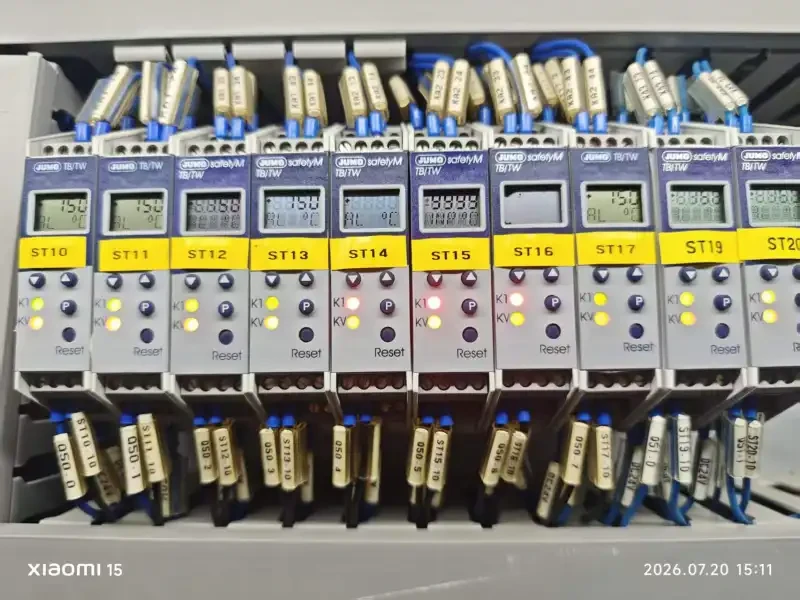
JUMO 701160 Temperature Limiter Case Study | Shenzhen Hanwei Industrial Technology Co., Ltd. | Industrial Equipment Temperature Safety Protection
Shenzhen Hanwei Industrial Technology Co., Ltd. employs the German JUMO safetyM TB/TW 701160 temperature limiters (model 701160/8-0153-001-25, Pt100 3-wire input) in its industrial automation control systems to enable real-time equipment temperature monitoring and overtemperature safety protection. Upon reaching the set limit, a relay output triggers protective actions and safety interlocks.
View CasesOTHER SOLUTIONS
Other Category Solutions
EC Fan Energy Saving Retrofit
Replace traditional AC fans with EC permanent magnet fans for stepless speed control and on-demand airflow, significantly reducing energy consumption in HVAC and equipment fan systems.
Fan · PANKA EC Fan SolutionPengke EC Fan Air System Energy-Saving Solution
PANKA EC electronic commutation fans replace traditional AC and belt-driven fans. With a direct motor-to-impeller connection, they require zero maintenance and exceed IE5 efficiency standards. They support stepless speed control from 0 to 10V or 4 to 20mA and MODBUS-RTU group control. Paired with FAN Master intelligent selection software for precise model matching based on actual operating conditions, these fans enable energy-efficient retrofits for air systems in HVAC, data centers, and cleanrooms.
Control System · Smart Water IoT MonitoringSmart Monitoring and IoT Operations & Maintenance Solutions for Water and Environmental Protection
Centered on Panpu's electrical control cabinets, SCADA monitoring systems, and self-developed SaaS IoT cloud platform, we integrate process models, intelligent algorithms, BIM visualization, and cloud-based IoT technologies to deliver end-to-end solutions for water and environmental facilities. Our solutions cover terminal data collection, local control, and centralized cloud operations, enabling multi-site aggregation via dedicated VPN networks to a central control center.
Looking for a motor and energy-saving solution tailored to your operating conditions?
Submit request. Our technical engineer will contact you within 1 business days.