

Automated Monitoring System for Waste Gas Treatment: Jiangnan Shipbuilding – End-to-End Data Collection and Protocol Integration
The Jiangnan Shipyard waste gas treatment system comprises multiple processing units and wastewater tanks. Equipment from different vendors used inconsistent communication protocols, resulting in fragmented monitoring and difficulty aggregating data. Fault detection relied on manual inspections, causing delayed responses. The project implemented MODBUS protocol for data transmission across the control system, enabling real-time collection and centralized delivery of equipment data from all units and tanks to the monitoring station. It integrated communication protocols from multi-vendor devices to eliminate data silos caused by protocol incompatibility. A device fault alert feature was configured to notify operations staff promptly upon detecting anomalies. After the upgrade, system status is displayed centrally on the monitoring dashboard, allowing staff to monitor equipment performance without being onsite. Fault response efficiency has significantly improved.
RESULTS
Transformation Results
KEY METRICS
MODBUS
Real-time
Multi-vendor
Push notifications in real time
Data from all equipment in the waste gas treatment system is collected and transmitted via a unified MODBUS protocol. Communication protocols from multiple vendors are integrated, enabling timely fault alerts and notifications. Operations teams can monitor system status remotely without needing to be on-site.
Data Scope and Validation Source: The above metrics are derived from on-site measurements under identical operating conditions before and after the retrofit (comparing energy meter readings with equipment operation logs). The statistical period covers 30 consecutive days of full operation post-retrofit. Motor energy efficiency ratings follow GB 18613-2020 and IEC 60034-30-1, while product efficiency values are cited from the manufacturer's factory test reports. Actual results may vary based on load rate, annual operating hours, and specific operating conditions.
STRUCTURED LINKS
Related Products & Industries
Related ProductsCo3Item
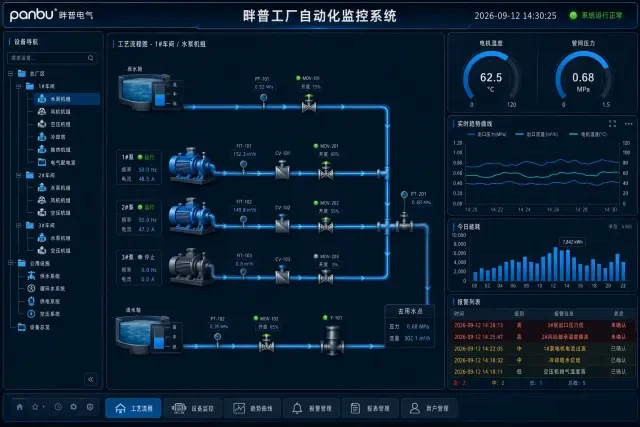
Panpu Factory Automation Monitoring System (SCADA)
Panpu Factory Automation Monitoring System integrates automatic control, manual control, and remote monitoring. Leveraging PLCs, host computers, DCS, and graphical control software, it provides intuitive visual dashboards and real-time sensor data displays to monitor production and equipment status.
View Product Details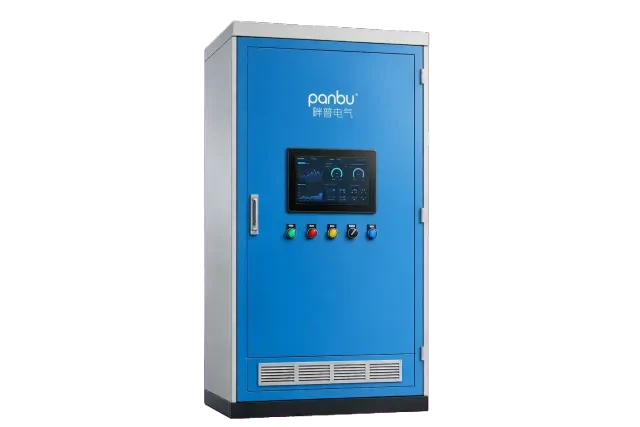
Panpu PLC Control Cabinets and MCC Switchgear Assemblies
Panpu delivers complete PLC control cabinets and MCC switchgear, including PLC panels, MCC panels, VFD control cabinets, low-voltage distribution boards, and equipment control cabinets. We provide turnkey solutions spanning design and construction planning, solution optimization, panel supply, installation, software development, programming, and commissioning.
View Product Details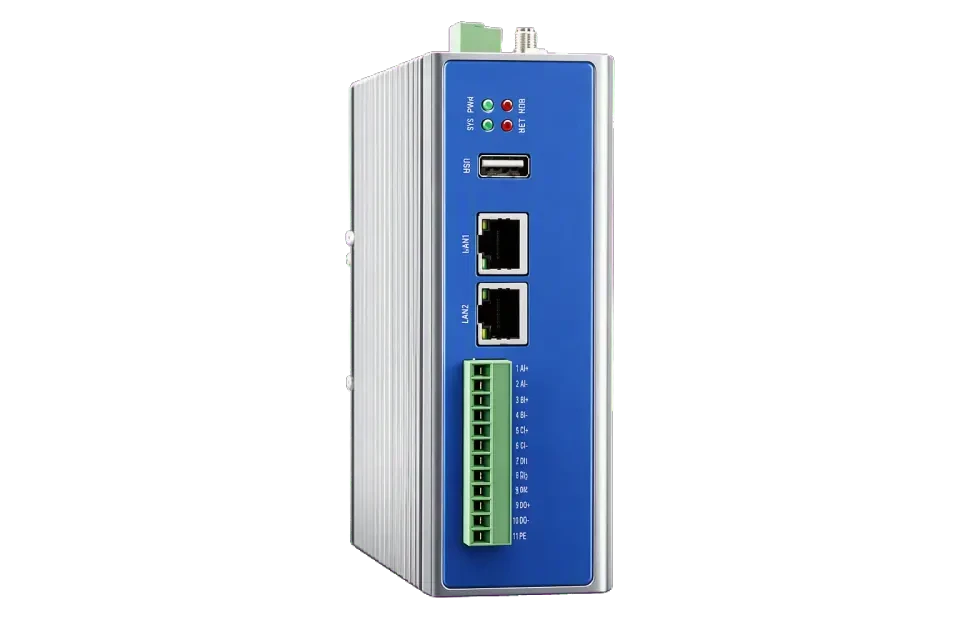
Panpu IoT Controller and Data Acquisition Terminal
Panpu's self-developed IoT controller offers plug-and-play cloud connectivity, supporting multiple communication methods and system expansion options. It enables device data collection and protocol integration, allowing users to view and manage device status via mobile and PC platforms.
View Product DetailsRELATED
Products and Solutions in this Project

Paper & Chemical Automation
Automated Monitoring and Waste Gas Treatment Solution for Pulp & Paper Chemical Production Lines
Centered on Panpu PLC control cabinets and MCC switchgear, SCADA factory automation monitoring systems, and SaaS IoT cloud platforms, we deliver integrated automation solutions for papermaking and chemical production lines. Our offerings encompass process control, exhaust gas treatment, and wastewater monitoring. Supporting MODBUS, OPC, Profibus-DP, and RS485 protocols, our system enables unified data collection across multi-vendor equipment and provides proactive fault alert notifications.

Smart Water IoT Monitoring
Smart Monitoring and IoT Operations & Maintenance Solutions for Water and Environmental Protection
Centered on Panpu's electrical control cabinets, SCADA monitoring systems, and self-developed SaaS IoT cloud platform, we integrate process models, intelligent algorithms, BIM visualization, and cloud-based IoT technologies to deliver end-to-end solutions for water and environmental facilities. Our solutions cover terminal data collection, local control, and centralized cloud operations, enabling multi-site aggregation via dedicated VPN networks to a central control center.
SOLUTIONS
Recommended related solutions
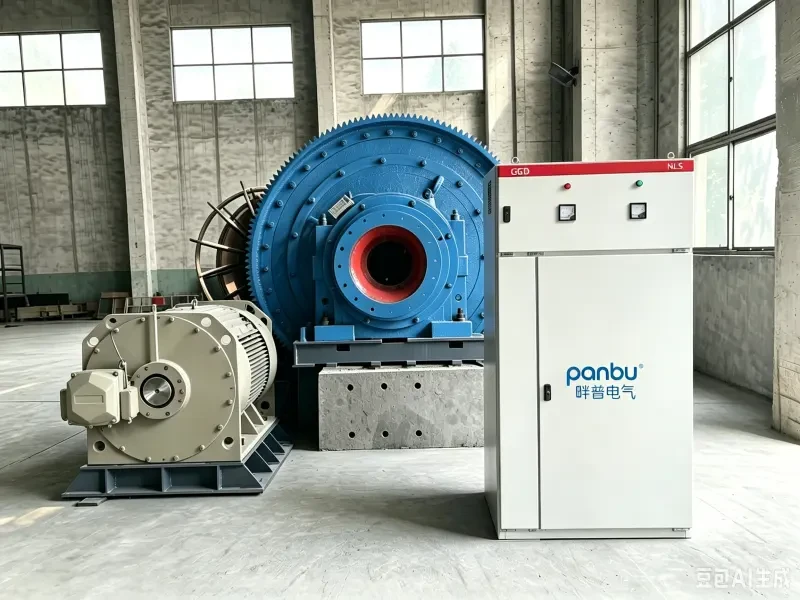
Motor replacement solutions
Address challenges such as aging equipment, motor maintenance needs, and high procurement costs. Leveraging motor parameters, mechanical dimensions, and actual operating conditions, we provide 1 compatible industrial motor replacement solutions for 1, requiring no structural modifications to your equipment.
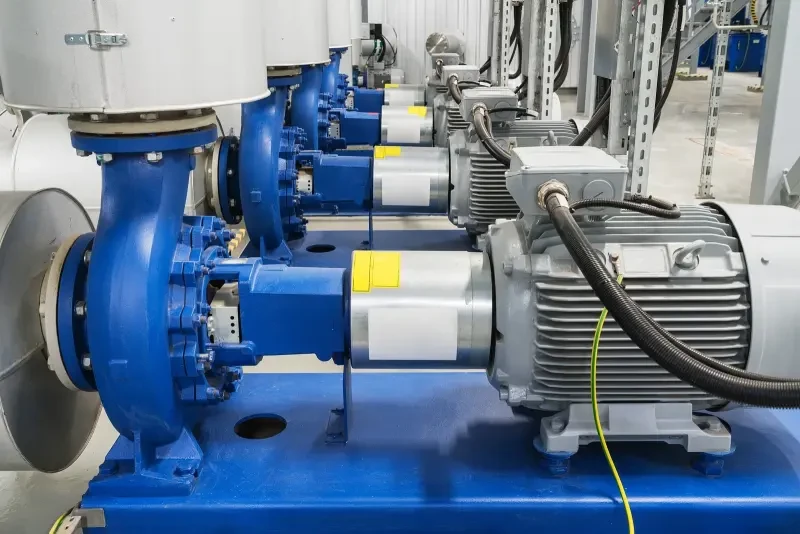
Permanent Magnet/Synchronous Reluctance Motor Energy Efficiency Retrofit
Replace traditional induction motors with permanent magnet synchronous motors (PMSM) or permanent magnet reluctance motors (PMRM). Optimize motor-load matching based on operating conditions to reduce energy consumption and improve operational stability.

Industrial Energy Saving Solutions Consultation
Factory-wide motor system energy-saving diagnostics and retrofit planning, delivering phased implementation roadmaps and ROI projections.
More Cases
View All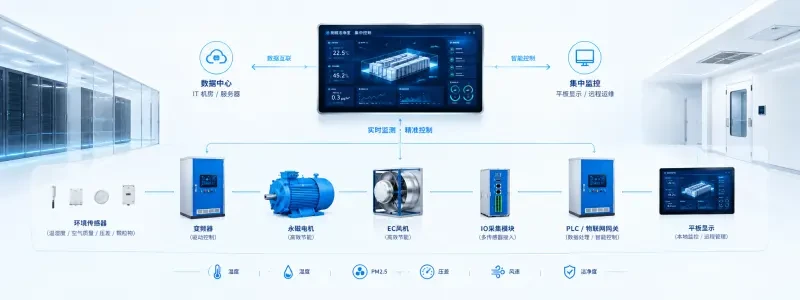
Panpu EC Permanent Magnet Fan Case | Cleanroom Operator | Energy-Saving Retrofit of Cleanroom Fan Clusters with On-Demand Speed Control
Replace traditional AC fan clusters with EC permanent magnet fans, and use differential pressure sensing to enable on-demand speed control for air supply, reducing energy consumption and noise in the cleanroom's ventilation system.
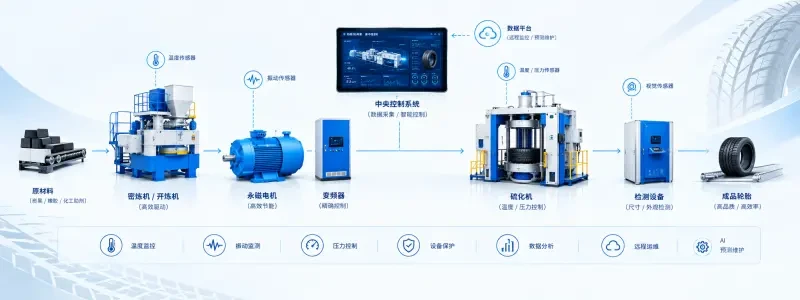
Panpu Permanent Magnet Direct Drive Motor Case: Kiri Chemical Rubber Tire Factory – Whole-Line Drive System Energy Efficiency Retrofit for Tire Production Line
Optimize the motor drive system across the entire tire production line, coordinate multi-device control to reduce overall energy consumption, and adapt to wheel control and molding processes. Help factories achieve energy savings, carbon reduction, and improved production efficiency.

28 0KW Permanent Magnet Motor + VFD Case Study | SCM Chemical Fiber | Large-Scale Process Equipment Retrofit for Energy Efficiency
Equipped with a 280kW permanent magnet motor and dedicated variable frequency drive (VFD), this integrated solution optimizes load performance, reduces energy consumption, and enhances operational stability. It delivers complete case study support to help large-scale process equipment achieve cost reduction and efficiency gains.
Looking for a motor and energy-saving solution tailored to your operating conditions?
Submit request. Our technical engineer will contact you within 1 business days.